Category: Capitol Coverage

  • Party Pressure

    Party Pressure

    [Outgoing Mail]

    [Dec 09, 2025]

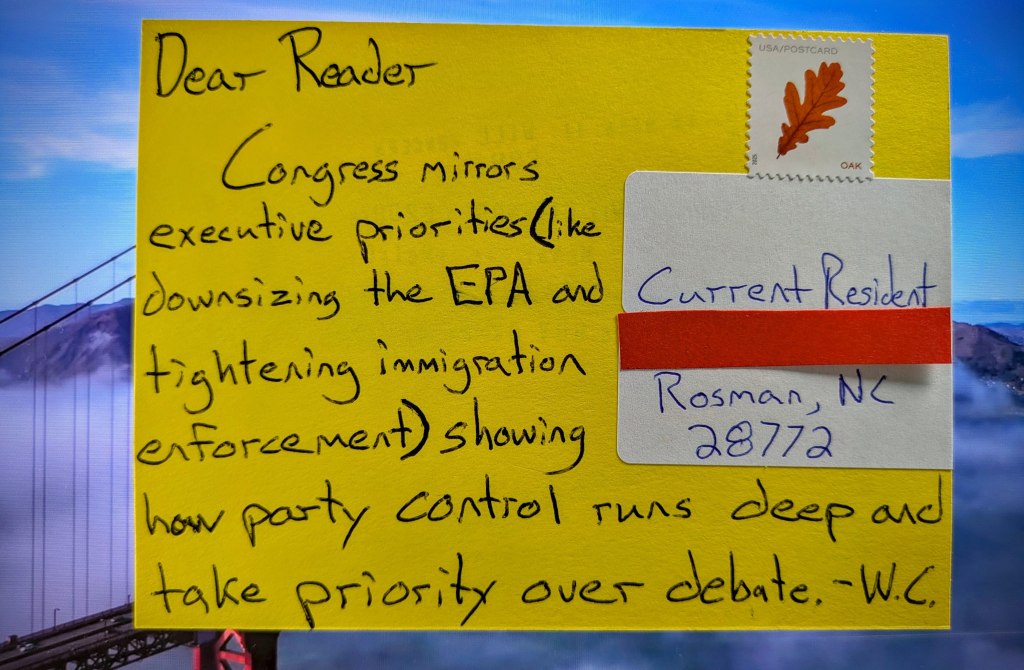
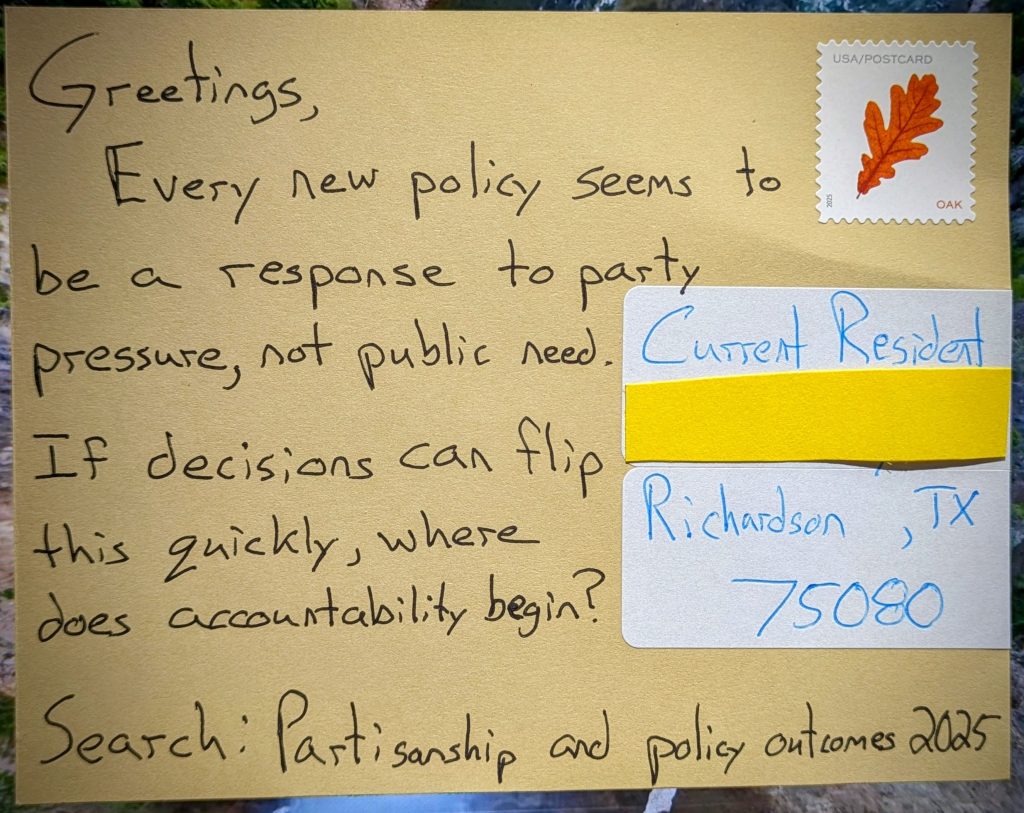
    Congress is more divided and partisan than ever, leading to slow progress on the big issues that matter most to regular people. Republicans control both the House and Senate, but with extremely slim majorities—the House has only a five-seat Republican edge, and the Senate just a few seats more. Because the margins are so tight, party members rarely cross the aisle to work with the other side. Instead, politicians spend more time fighting, blocking each other’s plans, and focusing on decisions that mostly please their most loyal supporters. This constant back-and-forth makes it hard for Congress to pass meaningful laws on things like healthcare costs, border security, or fixing roads, which leaves many Americans feeling frustrated and ignored.​

    For Texans, this gridlock in Congress can be felt in their everyday lives. When lawmakers in Washington argue instead of act, essential funding for Texas schools, highways, and disaster recovery gets delayed or lost. For example, families who are still recovering from floods or severe storms depend on quick federal help, but political fighting can slow disaster relief payments. Texas farmers, oil workers, and small business owners also face uncertainty because Congress can’t agree on stable trade policies, energy rules, or long-term tax plans. As a result, many Texans feel that Congress is more interested in winning political games than in solving the real problems that hit home. This lack of progress has left people in Texas waiting for solutions that never come, deepening the sense that Washington doesn’t have their backs.

    [Sources]

    https://www.pewresearch.org/short-reads/2024/12/17/slim-majorities-have-become-more-common-in-the-us-house-and-senate/

    https://about.bgov.com/insights/congress/balance-of-power-in-the-u-s-house-and-senate/

    https://en.wikipedia.org/wiki/119th_United_States_Congress

    https://www.apmresearchlab.org/us-house-senate-control-2025

    .

    [Share | Subscribe | Follow]

    Instagram

    BlueSky

    X

    Pinterest

    Truth Social

    .

  • Folding

    Folding

    .[Outgoing Mail]

    [Nov 28, 2025]

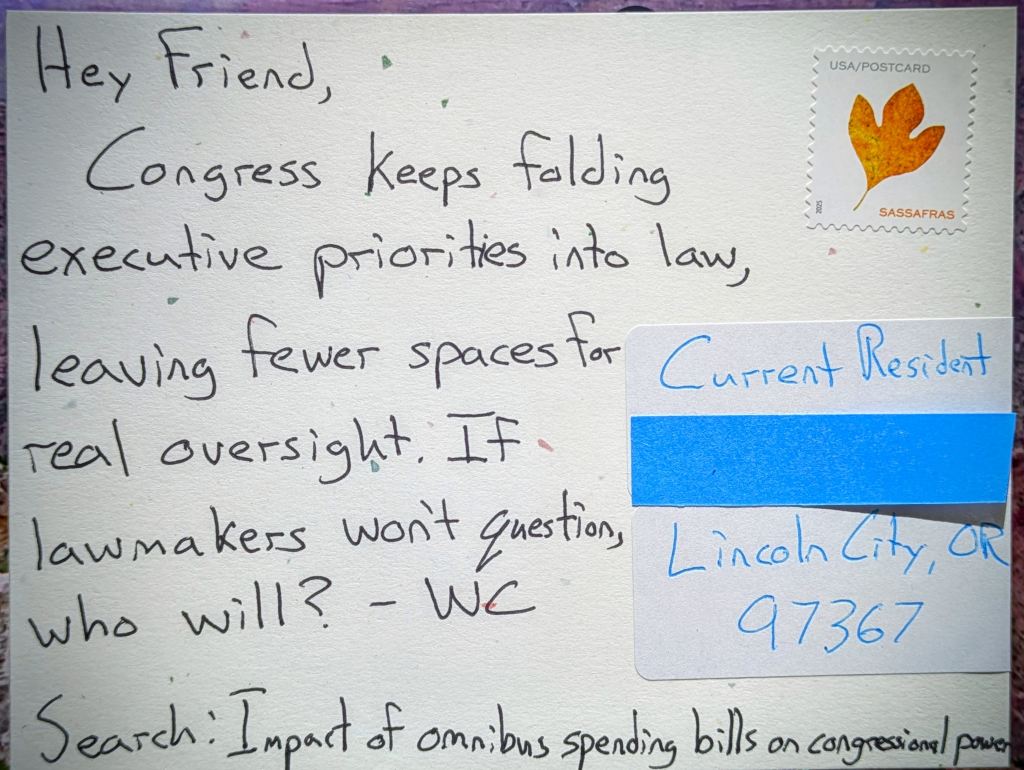
    The 2025 omnibus spending bill has significant effects on congressional power by shaping federal budget priorities and setting the tone for how much control Congress maintains over government programs. This massive bill, which provides funding for government operations, often forces legislators to make trade-offs and compromises between competing interests. In 2025, the bill notably includes sweeping policy changes such as extending tax cuts primarily benefiting wealthier Americans, imposing stricter work requirements for Medicaid, and shifting more costs of food assistance programs to states. These elements reflect how Congress uses spending bills to influence national policy while balancing partisan demands and budget constraints. The bill further highlights tensions between legislative authority and executive ambitions, as lawmakers try to maintain influence over spending while managing pressures from the administration.​

    For residents of Oregon, the 2025 omnibus bill translates into real challenges. Changes to Medicaid mean that thousands of Oregonians could lose coverage if they can’t meet new work or volunteer requirements, disrupting healthcare access for vulnerable groups. The bill also shifts costs of food assistance programs like SNAP to the state budget, forcing Oregon to either find new funding sources, reduce benefits, or face cuts, creating uncertainty in communities relying on these programs. Timber counties in Oregon, which depend on federal funds, face cuts too, affecting local economies already struggling with job losses and population decline. These impacts show how the omnibus bill’s budget decisions directly affect ordinary Oregonians by reshaping healthcare, food security, and local economies, while also reflecting how Congress’s spending choices influence power dynamics between federal and state governments.

    [Sources]

    https://www.congress.gov/bill/119th-congress/house-bill/1968/text

    https://www.opb.org/article/2025/07/03/congress-passes-reconciliation-bill-5-impacts-on-oregon/

    .

    [Share | Subscribe | Follow]

    Instagram

    BlueSky

    Pinterest

    Truth Social

    .

  • Truth & Talk

    Truth & Talk

    .[Outgoing Mail]

    [Nov 22, 2025]

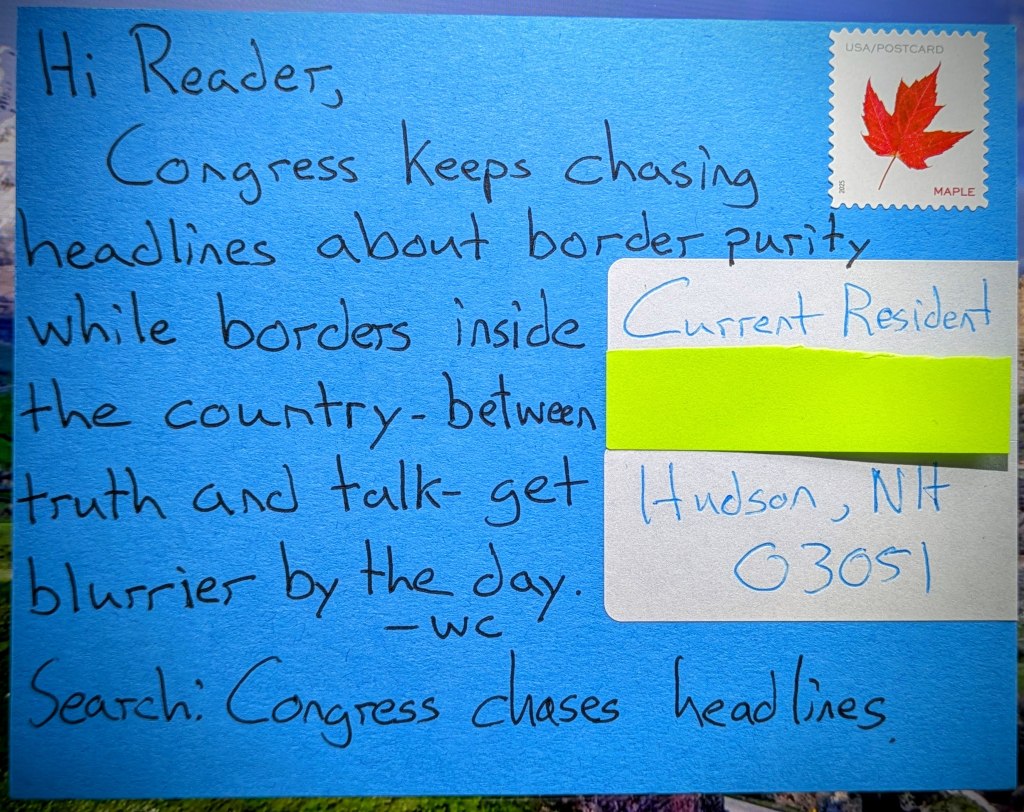
    Congress often appears more focused on chasing headlines and scoring political points than on doing the hard work of serving the public. Lawmakers frequently prioritize flashy speeches, media battles, and symbolic legislation that draws attention but rarely solves real problems. This focus is partly driven by the intense polarization in Washington, where each party aims to rally its base rather than seek common ground, creating gridlock that stalls important policies on healthcare, education, and infrastructure. The resulting political theater makes it seem like Congress is more interested in winning public opinion battles than addressing the everyday needs of Americans.​

    For residents of New Hampshire, this headline-driven Congress means frustration and a lack of progress on issues critical to their lives. New Hampshire relies heavily on federal support for rural healthcare, education funding, and economic development, but gridlock often delays or blocks these resources from reaching communities. Many Granite Staters feel disconnected from their representatives, seeing elected officials more concerned with social media battles or news cycles than with profiles of their constituents’ struggles. This dynamic weakens trust in government and makes it harder for residents to get the services and support they need, amplifying the sentiment that Washington is broken and out of touch with everyday Americans.

    [Sources]

    https://www.cnn.com/2025/10/05/politics/government-shutdown-enters-second-week

    https://about.bgov.com/insights/public-affairs-strategies/top-10-public-policy-issues/

    .

    [Share | Subscribe | Follow]

    Instagram

    BlueSky

    Pinterest

    Truth Social

    .

  • A Publicist

    A Publicist

    [Share & Follow]

    Instagram

    Pinterest

    .

    [Outgoing Mail]

    Nov 13, 2025

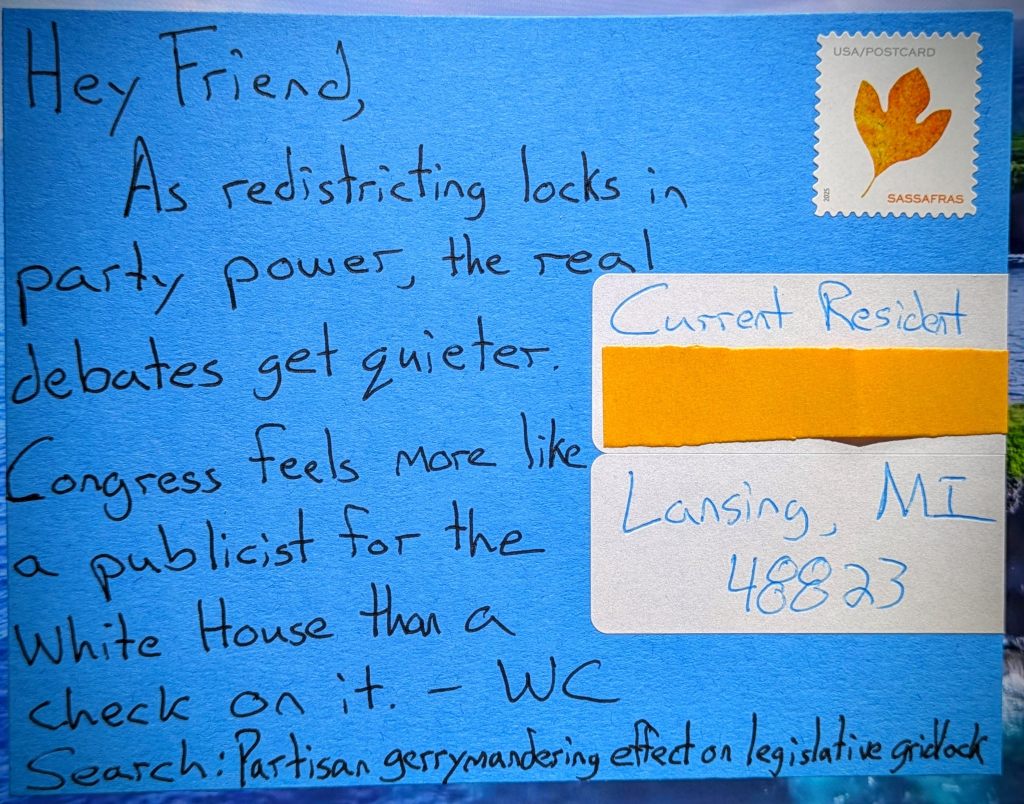
    Partisan gerrymandering—when politicians draw voting district maps to favor their own party—has fueled legislative gridlock in 2025 America by ensuring that most lawmakers come from “safe” districts where they rarely have to compromise with the other side. Studies show this form of redistricting skews representation and locks in divided government, making it much harder for Congress or state legislatures to pass laws, especially on controversial issues. This entrenched partisanship means lawmakers are less accountable to the broader public and more focused on pleasing their party base, even if the public wants compromise. Research from the University of California Riverside finds many Americans see gerrymandering as a form of political corruption, which further erodes public trust in the fairness of elections and democracy itself. In 2025, legislative activity has sputtered; hundreds of bills linger without action while politicians blame each other, with real progress paralyzed by party-line voting and infighting.​

    Lansing, Michigan, offers a vivid case study of how gerrymandering’s legacy sustains gridlock. Historically, Michigan’s legislature was a textbook example of gerrymandering—with district lines carefully drawn by Republicans in secret to keep control even when they didn’t win the statewide popular vote. This imbalance caused Michigan’s lawmakers to pass far fewer bills and struggle with divided government, with Republican control of the House and Democrat control of the Senate often resulting in legislative stalemates. Reforms like the 2018 creation of the Michigan Independent Citizens Redistricting Commission aimed to fix the problem by taking map-drawing out of politicians’ hands. However, the effects of decades of skewed maps linger, and in 2025, Lansing has seen one of its slowest years ever, passing just nine bills by August, compared with dozens or hundreds in prior years—clear evidence of partisan gridlock fueled by map manipulation

    [Sources]

    https://www.fairdistrictspa.com/updates/lessons-from-michigans-successful-independent-redistricting-commission

    https://www.fox47news.com/lansings-legislative-gridlock-political-divide-leads-to-historically-slow-bill-passage#google_vignette

    https://news.ucr.edu/articles/2025/08/12/gerrymandering-erodes-confidence-democracy

    https://academic.oup.com/jla/article/17/1/77/8255538?login=false

    https://statecourtreport.org/our-work/analysis-opinion/next-round-partisan-gerrymandering-fights

    [Share & Follow]

    Instagram

    Pinterest

  • On Mute

    On Mute

    [Outgoing Mail]

    Nov 4, 2025

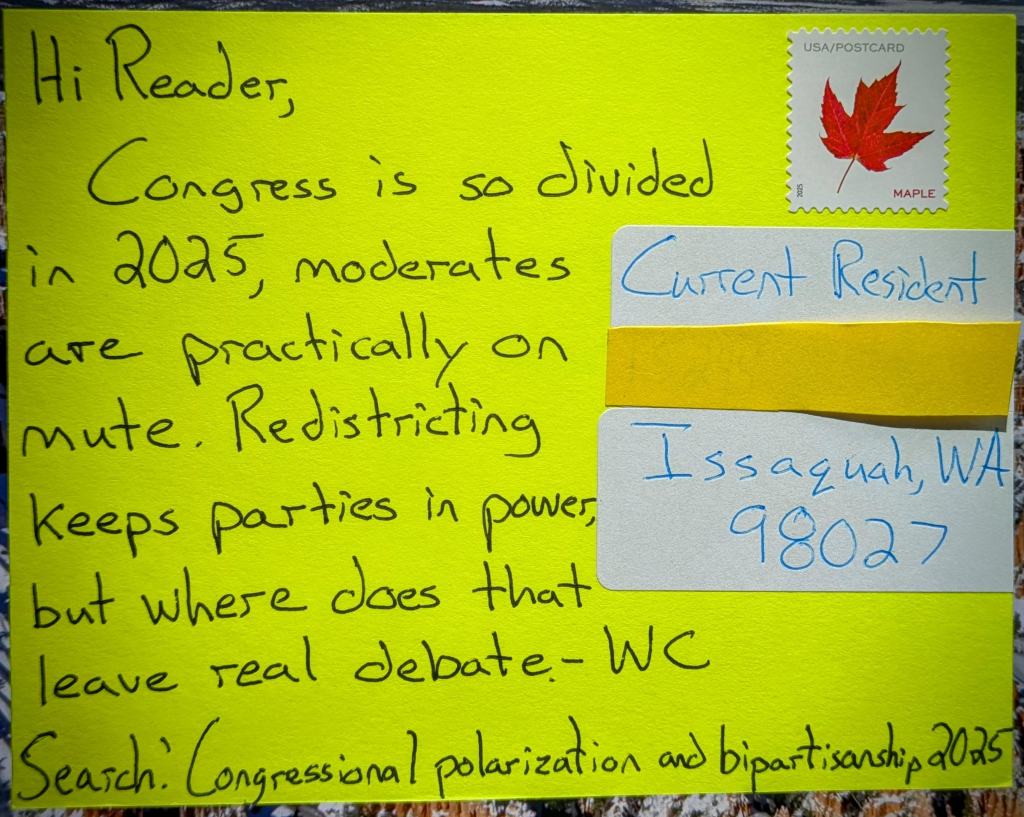
    Congress in 2025 has remained sharply divided, with polarization continuing to shape how politicians act and how few laws are passed. Researchers at the Carnegie Corporation and Pew Research Center report that both parties have grown more distant from one another not only on issues like abortion and climate change but in the way they view the basic role of government. Redistricting pushed by both parties—encouraged by President Trump’s allies in states they control—has worsened polarization by locking in safe seats where representatives have little reason to compromise. As a result, partisan gridlock is common, and bipartisanship, while not completely gone, is limited mainly to issues like defense spending and foreign policy where both sides see shared national interests. Even former lawmakers now admit that the “political hatred” between parties has reached a level where cooperation is difficult unless voters directly punish dysfunction.​

    Washington state reflects this national pattern but shows glimmers of balance. Its congressional delegation for 2025 is dominated by Democrats—ten Democrats and two Republicans—but includes a few moderates, like Democrat Marie Gluesenkamp Perez and Republican Dan Newhouse, who have resisted the extremes of their parties. Both have been targeted by activists from their own sides, highlighting how polarization pressures even those who work across the aisle. At the same time, Washington’s political structure, with statewide mail-in voting and strong independent voter blocs, has helped sustain some degree of local bipartisanship, particularly in rural infrastructure and forestry policy. Still, the state’s mostly one-party delegation mirrors the national pattern where electoral maps and party loyalty leave little room for compromise—showing that polarization in Washington, like in Congress, is more the rule than the exception

    SOURCES

    https://ballotpedia.org/United_States_congressional_delegations_from_Washington

    https://gowestassociation.org

    https://www.carnegie.org/our-work/article/why-polarization-is-a-problem/

    https://www.pewresearch.org/topic/politics-policy/political-parties-polarization/political-polarization/

    https://onlinelibrary.wiley.com/doi/10.1111/polp.70082?af=R

    https://criticaldebateshsgj.scholasticahq.com/article/142792-the-special-exception-a-bipartisan-consensus-on-defense-spending-in-an-era-of-extreme-political-polarization

    https://home.dartmouth.edu/news/2025/09/research-shows-there-are-no-easy-fixes-political-hatred

    https://luskin.ucla.edu/is-bipartisanship-worth-it-the-challenge-of-working-through-deep-political-divides

  • Scramble to Explain

    Scramble to Explain

    [Outgoing Mail]

    Nov 1, 2025

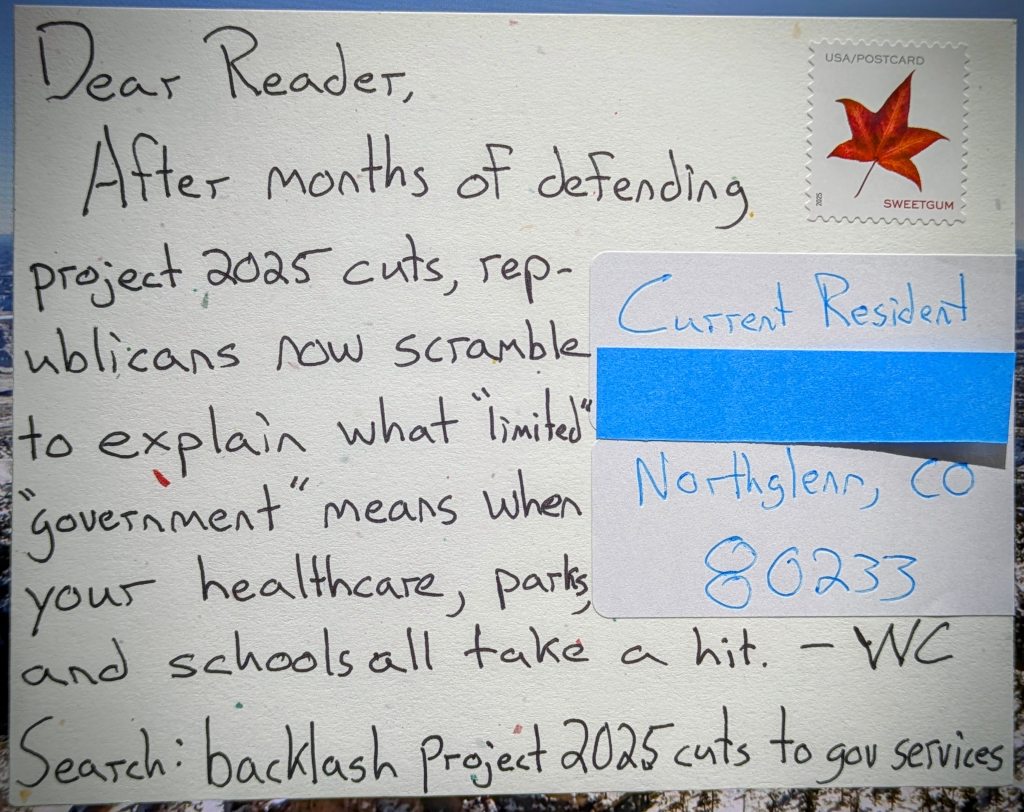
    The backlash to the Project 2025 cuts has been widespread because the plan aims to shrink or eliminate major parts of the federal government that people depend on for daily life. Project 2025 is a conservative roadmap written by policy groups close to President Trump, and since his return to office, it has guided budget decisions that slash funding for public health, energy, and social programs.

    During the fall 2025 government shutdown, Trump’s team used the crisis to advance these cuts, laying off federal workers and halting money for environmental and housing programs in Democratic-leaning states. These actions were justified as efforts to fight “wasteful spending,” but they left many communities without support. Critics say the cuts deepen inequality because they reduce services that protect the poor, elderly, and disabled, while increasing power within the executive branch to decide where funds go.​

    In Colorado, the effects of Project 2025’s federal cuts have been immediate and painful. The Department of Energy canceled over $600 million in funding for 38 local projects, including those aimed at expanding clean energy and stabilizing power grids, which state leaders warned could raise electric bills and lead to job losses in rural areas. Governor Jared Polis and Colorado’s congressional delegation publicly protested these moves, saying they threaten both working families and long-term economic security. Federal reductions have also pressured Colorado’s state budget, which depends heavily on federal programs for about a third of its revenue, forcing local officials to scramble to cover gaps in childcare, healthcare, and transportation. As a result, many Coloradans see the cuts not just as temporary budget moves but as a direct attack on government’s basic role in supporting communities duringng hard times.

    SOURCES

    https://www.pbs.org/newshour/politics/amid-shutdown-fight-trump-no-longer-distancing-himself-from-project-2025

    https://time.com/7323278/trump-project-2025-government-shutdown/

    https://www.americanprogress.org/article/fact-sheets-the-harmful-effects-of-project-2025-by-state/

  • Like Campaign Ads

    Like Campaign Ads

    [Outgoing Mail]

    Oct 26, 2025

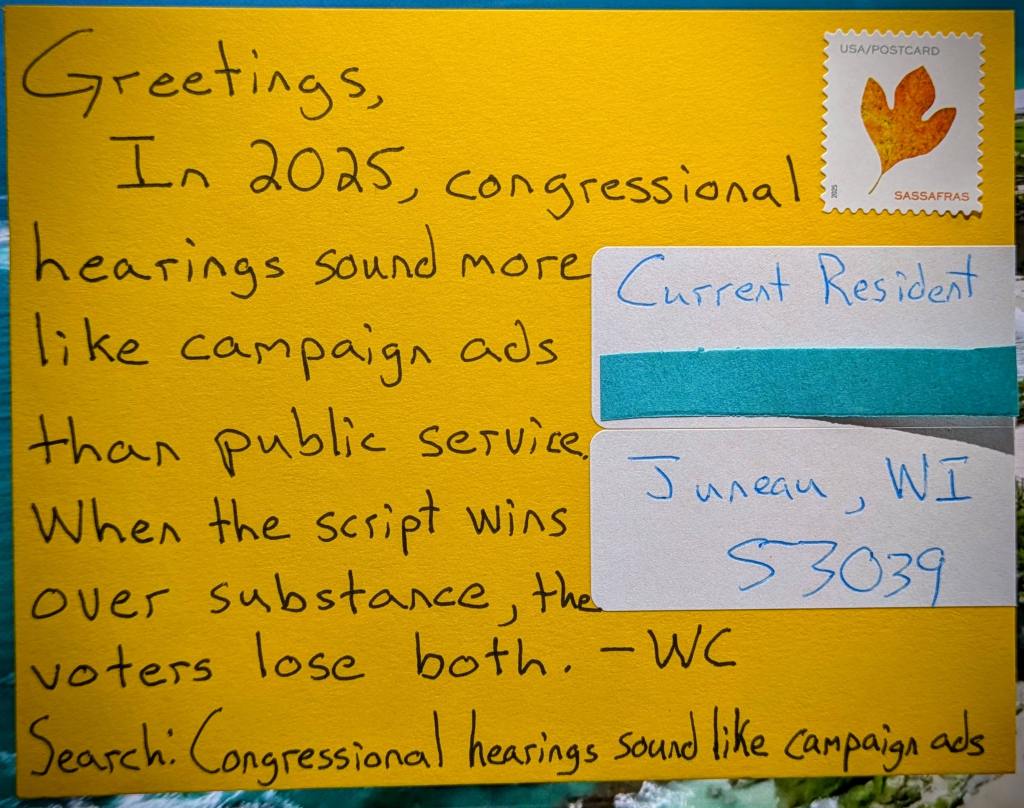
    Congressional hearings have turned into mere spectacles for political grandstanding, with politicians delivering flashy, pre-written speeches to generate viral social media content rather than focus on serious legislative work. This preoccupation with “message politics” undermines the development of meaningful policy and erodes public trust in the government’s ability to tackle complex issues, as genuine inquiry is overshadowed by theatrical confrontations.

    SOURCES

    https://jscholarship.library.jhu.edu/items/9b8f26f0-230f-4d74-bf2d-97edcbc3fa52