Tag: medicaid

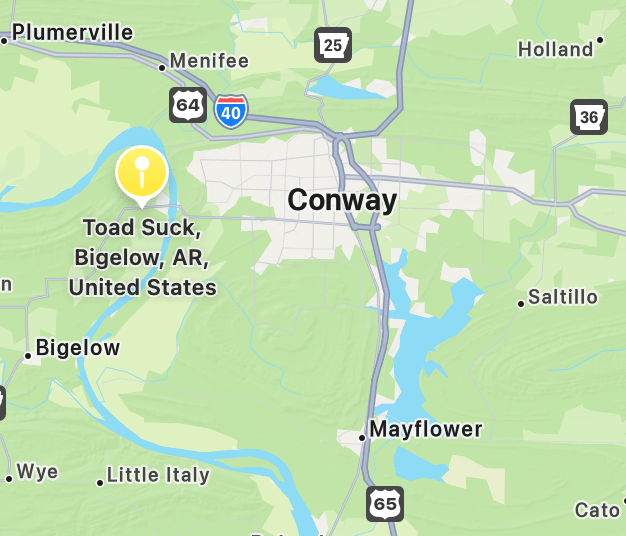
  • Toad Suck, AR

    Toad Suck, AR

    [Outgoing Mail]

    [Dec 21, 2025 | Postscape #044]

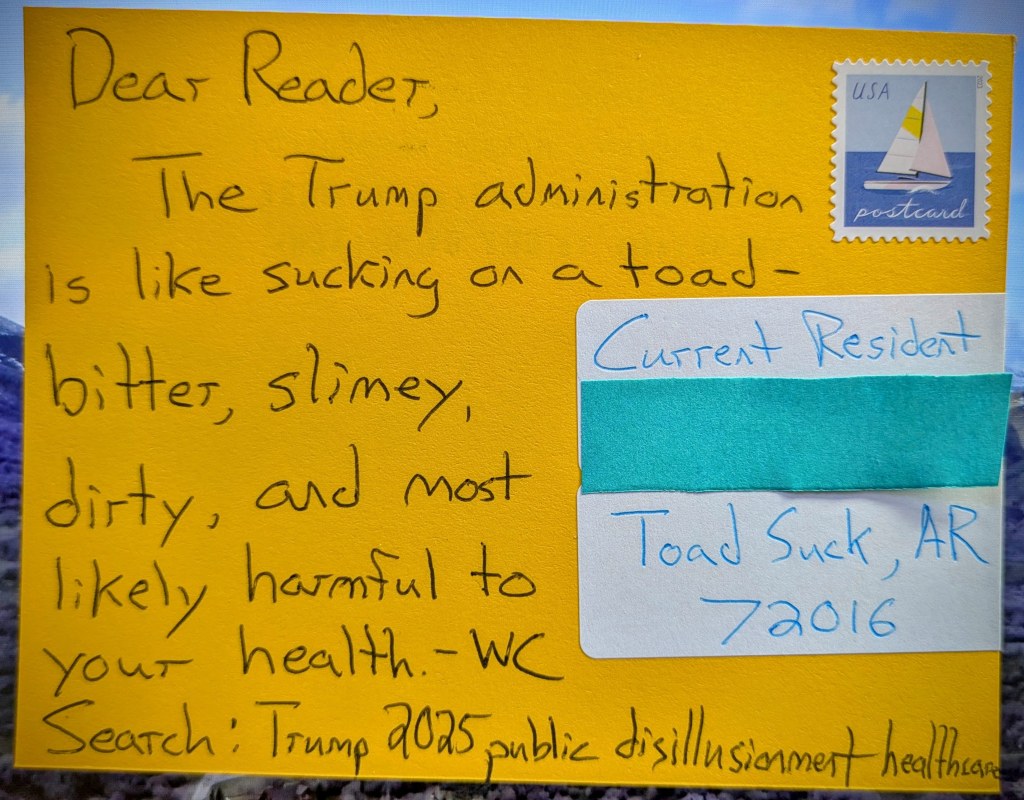
    Many Americans are feeling frustrated and disillusioned about healthcare, especially under President Trump’s policies. Many see the government’s decisions as making healthcare harder and more expensive to get, not easier. Trump’s major law changes this year, known as the “Big Beautiful Bill,” rolled back Medicaid and cut benefits for low-income families, while also weakening protections for those who buy insurance on their own. A recent poll shows that more than 8 in 10 Americans worry about insurance becoming unaffordable and millions losing coverage. Despite Trump’s focus on healthcare as a key issue, many people don’t trust him to handle it well, with only 31% approving of how he’s managing the system. The cuts mainly serve to finance tax breaks for wealthy Americans, while low-income families are left struggling without affordable options.

    In Arkansas, these problems hit especially hard. Arkansas already faces high rates of poverty and chronic illness, so losing Medicaid coverage or seeing food assistance cut feels like a disaster for thousands of families. Hospitals and clinics in rural Arkansas are stretched thin trying to treat more uninsured patients, and families often delay care because they can’t afford it. Many Arkansans have to make tough choices between paying for medicine, food, or rent, and the rollback of healthcare supports makes those choices even tougher. This growing healthcare crisis is making it clear for folks in Arkansas that promises from Washington don’t always translate into better health or security on the ground.

    [Sources]

    https://apnorc.org/projects

    [Share | Subscribe | Follow]

    Instagram

    BlueSky

    X

    Pinterest

    Truth Social

    .

  • Truth & Talk

    Truth & Talk

    .[Outgoing Mail]

    [Nov 22, 2025]

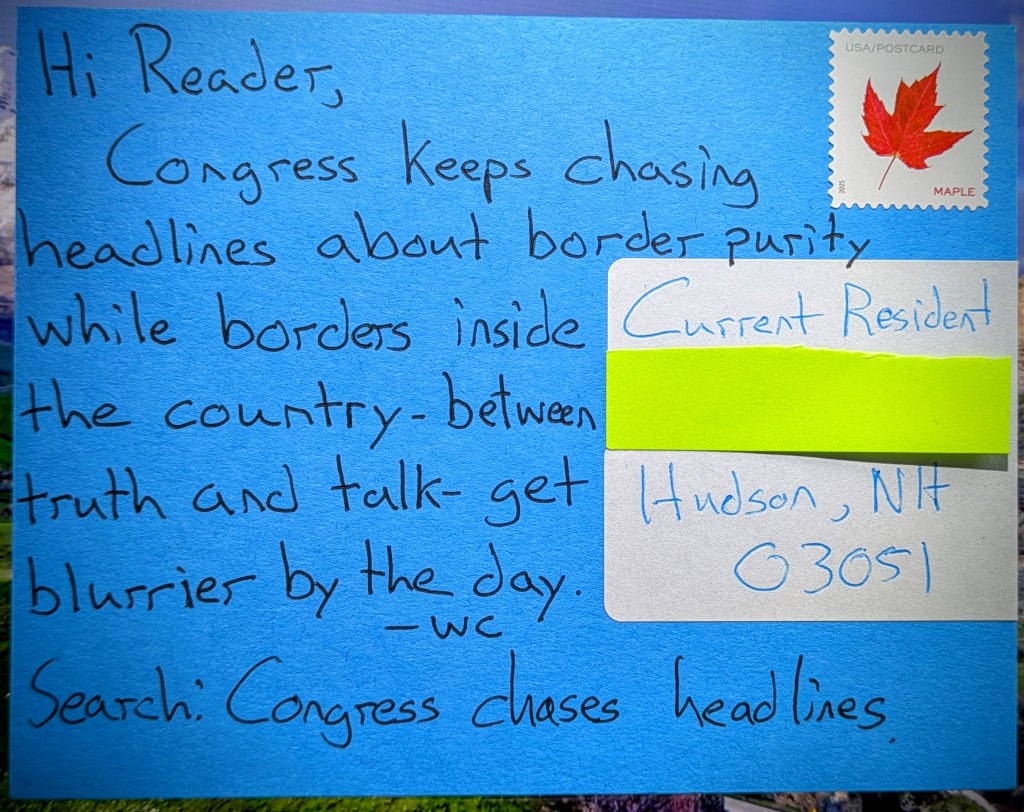
    Congress often appears more focused on chasing headlines and scoring political points than on doing the hard work of serving the public. Lawmakers frequently prioritize flashy speeches, media battles, and symbolic legislation that draws attention but rarely solves real problems. This focus is partly driven by the intense polarization in Washington, where each party aims to rally its base rather than seek common ground, creating gridlock that stalls important policies on healthcare, education, and infrastructure. The resulting political theater makes it seem like Congress is more interested in winning public opinion battles than addressing the everyday needs of Americans.

    For residents of New Hampshire, this headline-driven Congress means frustration and a lack of progress on issues critical to their lives. New Hampshire relies heavily on federal support for rural healthcare, education funding, and economic development, but gridlock often delays or blocks these resources from reaching communities. Many Granite Staters feel disconnected from their representatives, seeing elected officials more concerned with social media battles or news cycles than with profiles of their constituents’ struggles. This dynamic weakens trust in government and makes it harder for residents to get the services and support they need, amplifying the sentiment that Washington is broken and out of touch with everyday Americans.

    [Sources]

    https://www.cnn.com/2025/10/05/politics/government-shutdown-enters-second-week

    https://about.bgov.com/insights/public-affairs-strategies/top-10-public-policy-issues/

    .

    [Share | Subscribe | Follow]

    Instagram

    BlueSky

    Pinterest

    Truth Social

    .

  • Scramble to Explain

    Scramble to Explain

    [Outgoing Mail]

    Nov 1, 2025

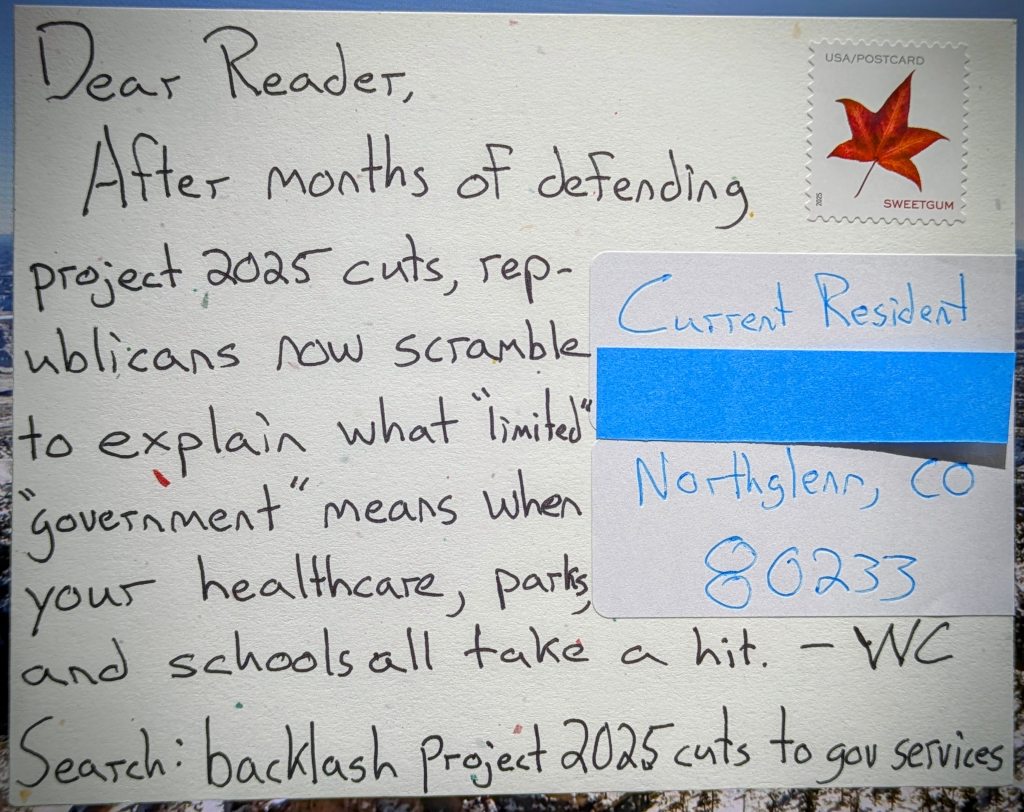
    The backlash to the Project 2025 cuts has been widespread because the plan aims to shrink or eliminate major parts of the federal government that people depend on for daily life. Project 2025 is a conservative roadmap written by policy groups close to President Trump, and since his return to office, it has guided budget decisions that slash funding for public health, energy, and social programs.

    During the fall 2025 government shutdown, Trump’s team used the crisis to advance these cuts, laying off federal workers and halting money for environmental and housing programs in Democratic-leaning states. These actions were justified as efforts to fight “wasteful spending,” but they left many communities without support. Critics say the cuts deepen inequality because they reduce services that protect the poor, elderly, and disabled, while increasing power within the executive branch to decide where funds go.

    In Colorado, the effects of Project 2025’s federal cuts have been immediate and painful. The Department of Energy canceled over $600 million in funding for 38 local projects, including those aimed at expanding clean energy and stabilizing power grids, which state leaders warned could raise electric bills and lead to job losses in rural areas. Governor Jared Polis and Colorado’s congressional delegation publicly protested these moves, saying they threaten both working families and long-term economic security. Federal reductions have also pressured Colorado’s state budget, which depends heavily on federal programs for about a third of its revenue, forcing local officials to scramble to cover gaps in childcare, healthcare, and transportation. As a result, many Coloradans see the cuts not just as temporary budget moves but as a direct attack on government’s basic role in supporting communities duringng hard times.

    SOURCES

    https://www.pbs.org/newshour/politics/amid-shutdown-fight-trump-no-longer-distancing-himself-from-project-2025

    https://time.com/7323278/trump-project-2025-government-shutdown/

    https://www.americanprogress.org/article/fact-sheets-the-harmful-effects-of-project-2025-by-state/

  • Hippo, KY #034

    Hippo, KY #034

    [Outgoing Mail]

    Oct 24, 2025 | Postscape #034

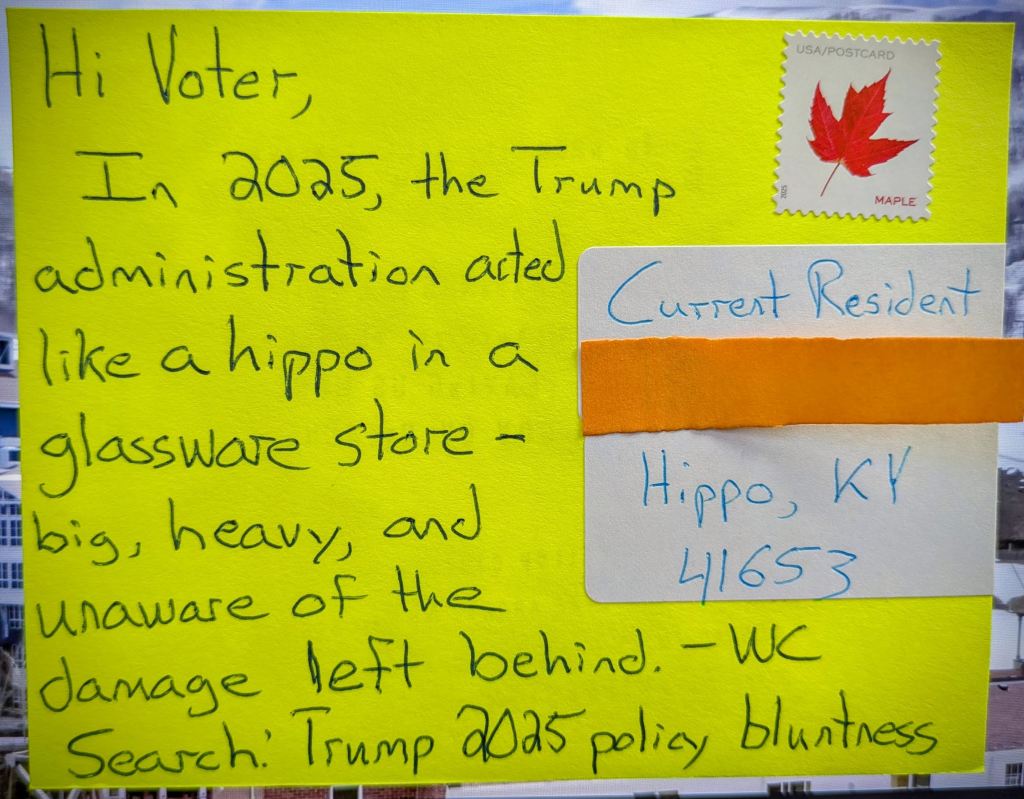
    The Trump Administration’s policies are characterized by their unapologetic approach and a vigorous application of executive power to implement significant (often contentious) reforms. Among the most notable effects on everyday Americans are increased costs stemming from tariffs, reductions in government assistance for at-risk communities, and intensified political and social discord related to immigration and cultural matters.

    Economists and major retailers continue to indicate that tariffs act as taxes on U.S. businesses and consumers, raising prices on imported goods. Forecasts reveal that tariffs will lower long-run GDP and wages, potentially causing significant lifetime losses for middle-income households. Additionally, the rapid implementation of tariffs has created policy uncertainty, discouraging business investment and hiring.

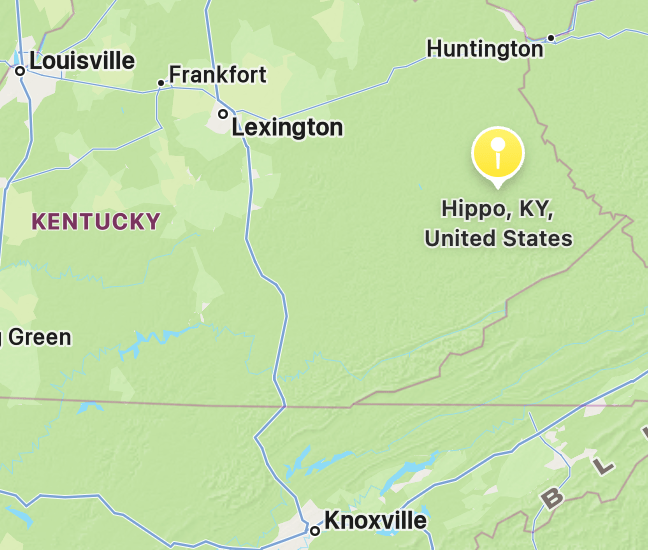
    Hippo, Kentucky (and the surround areas) are likely to feel the significant effects of this administration’s blunt 2025 policies, particularly regarding healthcare, social programs, and rising costs. Proposed cuts to essential programs like Medicaid and SNAP threaten the region’s economic stability, especially given its high poverty rates. Local businesses will face financial setbacks, and increased tariffs will raise prices for essential goods, impacting household budgets. Additionally, cuts to the Appalachian Regional Commission could harm community projects and schools, leading to a double negative effect of rising costs and diminished social safety net programs.

    SOURCES

    https://www.kentucky.com/opinion/editorials/article306974826

    https://www.whas11.com/article/news/politics/louisville-medicaid-healthcare-health-insurance-trump-bill/

  • No Name, CO #030

    No Name, CO #030

    [Outgoing Mail]

    Oct 11, 2025 | Postscape #030

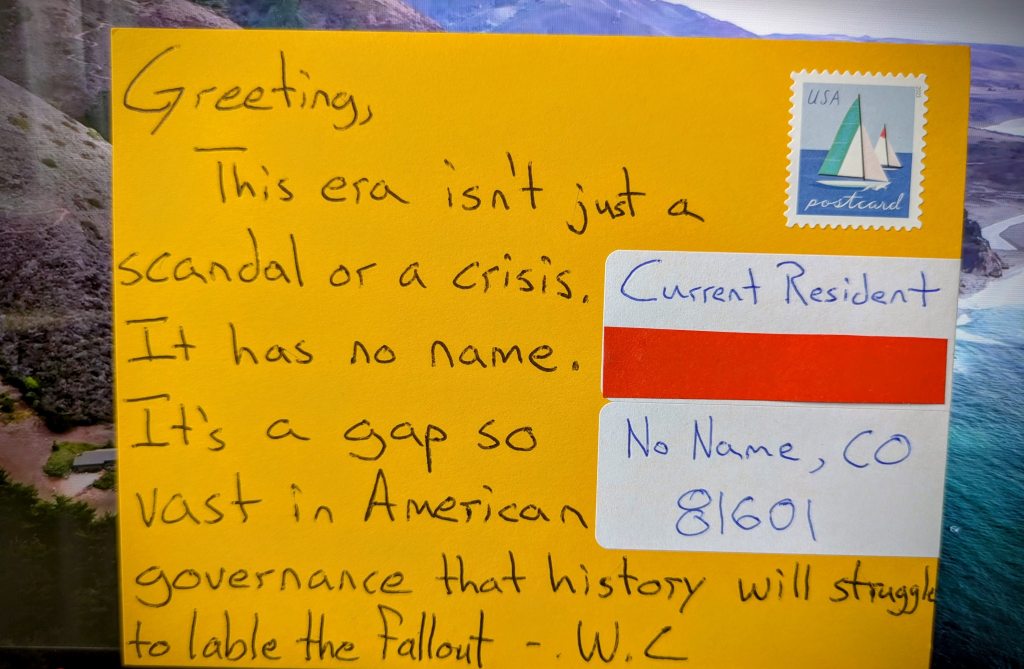
    The Trump 2025 administration is noted for its unprecedented executive actions. This has led to significant economic disruption and changes in governance that have a serious impacts to the daily lives of average Americans.

    Americans are experiencing economic and social challenges due to the government shutdown. Experts are predicting increased insurance premiums and a historical decline in GDP.

    A tariff system from President Trump in 2025 may significantly impact middle-income households and consumer prices, potentially resulting in job losses and less investment.

    Additionally, the administration has restructured federal agencies and policies, particularly affecting those aligned with the Democratic Party. The administration has quickly and drastically changed immigration, deregulation, and law enforcement norms.

    The average person in No Name, Colorado faces higher grocery and household costs due to the Trump administration’s tariffs, which increases prices on everyday goods significantly. Local families will struggle with rising health insurance premiums and reduced access to Medicaid, as new federal laws have raised annual premiums for many and cut Medicaid funding. Rural residents are expected experience worse health outcomes due to hospital closures. Home construction will slow because building material costs have risen over 4%, making it harder for rural residents to find affordable housing, leading to higher rent or mortgage payments. Small businesses in rural Colorado may need to cut jobs or close due to increased supply costs and economic uncertainty. Cuts to SNAP (food assistance) and additional regulations may leave tens of thousands without food support, making it difficult for low-income households to manage rising food prices.

    SOURCES

    https://www.americanprogress.org/article/new-trump-administration-policies-will-decrease-average-incomes-for-all-americans-except-the-top-1-percent/

    https://budgetmodel.wharton.upenn.edu/issues/2025/4/10/economic-effects-of-president-trumps-tariffs

    https://www.nbcnews.com/politics/congress/government-shutdown-2025-air-travel-social-security-impact-rcna235119

    https://www.axios.com/2025/09/23/trump-unprecedented-presidency-behind-the-curtain

    https://www.gov.ca.gov/2025/09/30/trump-to-americans-go-fck-yourself-shuts-down-republican-controlled-government-increasing-monthly-health-care-costs-by-hundreds-of-dollars/

  • Fries, VA #027

    Fries, VA #027

    [Outgoing Mail]

    Oct 06, 2025 | Postscape #027

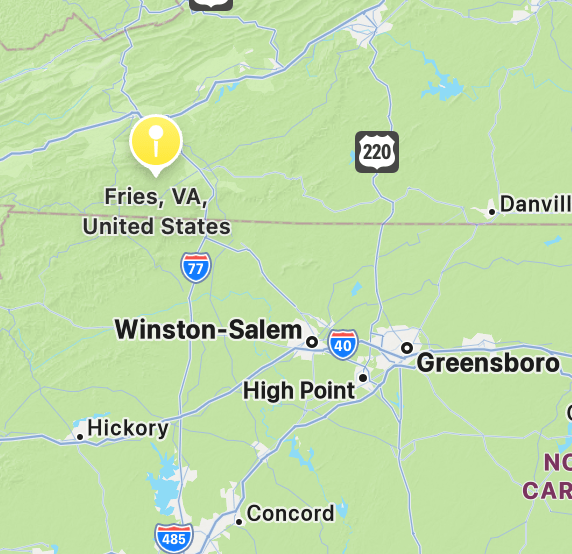
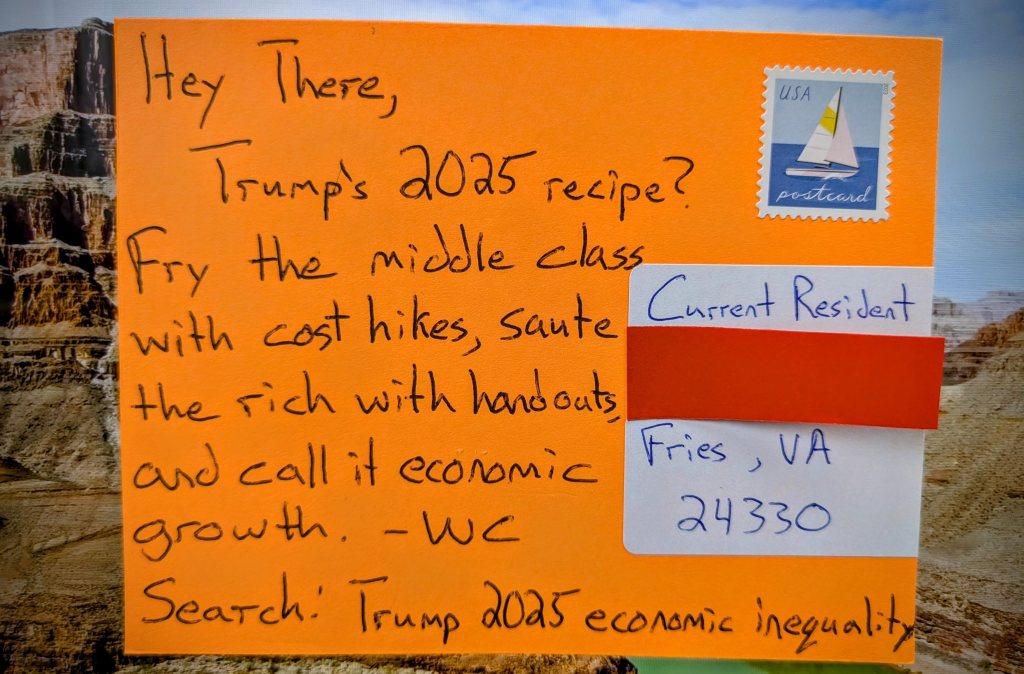
    President Trump’s 2025 economic policies have worsened economic inequality (particularly affecting low-income families and communities of color) by rolling back social safety nets like Medicaid and SNAP. His executive orders have weakened protections for racial and economic justice, increased economic insecurity, and coincided with a slowing economy facing rising recession risks.

    Federal policies in rural areas like Fries, VA, could intensify economic difficulties by limiting access to healthcare, nutrition assistance, and employment protections. Tariffs on imports increase costs for struggling families, ultimately creating a challenging environment for small communities with scarce resources.

    Trump’s 2025 economic approach is characterized by policies that favor wealthy households and corporations, while cutting programs and protections that support low-income and rural populations. The impacts include greater vulnerability in economic downturns, higher living costs, and diminished opportunities for economic mobility in places dependent on federal assistance and affordable goods.

    SOURCES

    https://www.oxfamamerica.org/explore/issues/economic-justice/how-is-the-trump-administration-deepening-inequality/

    https://budgetmodel.wharton.upenn.edu/issues/2025/4/10/economic-effects-of-president-trumps-tariffs

    https://www.epi.org/publication/the-last-two-recessions-have-hit-low-income-families-of-color-hard-trumps-economic-agenda-will-expose-millions-to-even-more-pain-when-the-next-recession-strikes/

  • Santa Claus, IN #023

    Santa Claus, IN #023

    Oct 01, 2025 | Postscape #023

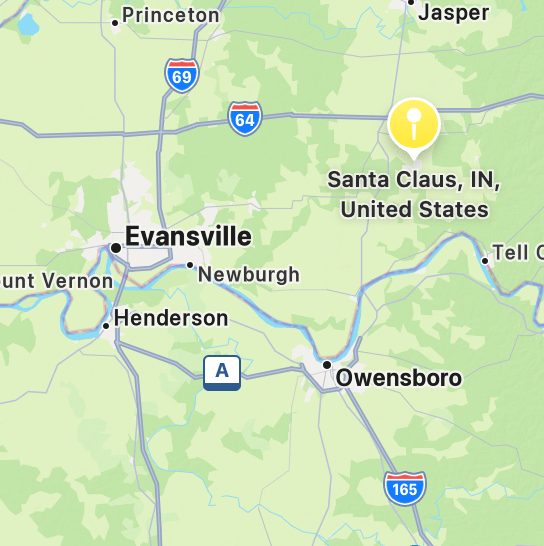
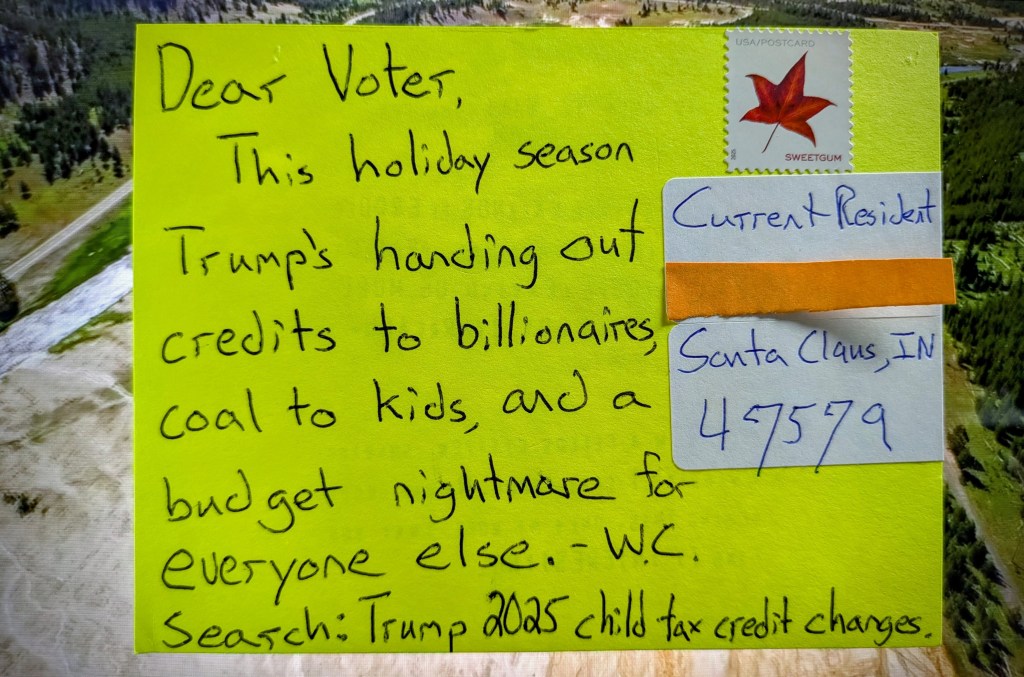
    Congress passed the “One Big Beautiful Bill” (OBBB), making many changes permanent, particularly from the 2017 tax cuts. The key update for families is the maximum credit, now $2,200 per kid, plus an inflation adjustment starting in 2026. However, while the top credit increased, the refundable portion remains capped at $1,700, leaving low earners without full benefits. Now, parents must have a valid Social Security Number (SSN) to qualify, cutting out about 2.7 million American kids from the credit.

    In Indiana, OBBB carries significant long-term risks for healthcare access, social safety nets, and services critical to lower-income and vulnerable populations. These downsides especially impact rural healthcare infrastructure, social welfare programs, and education support. Public opinion reflects concern, with two-thirds of people viewing the bill unfavorably after learning about increased uninsured rates, hospital funding cuts, and reduced Medicaid spending.

    SOURCES

    https://taxpolicycenter.org/taxvox/one-big-beautiful-bill-child-tax-credit-would-exclude-millions-american-children

    https://www.hrblock.com/tax-center/irs/tax-law-and-policy/one-big-beautiful-bill-taxes/

    https://bipartisanpolicy.org/blog/how-the-obbb-changes-to-the-child-tax-credit-will-impact-families/

  • Blue Ball, DE #022

    Blue Ball, DE #022

    Sep 29, 2025 | Postscape #022

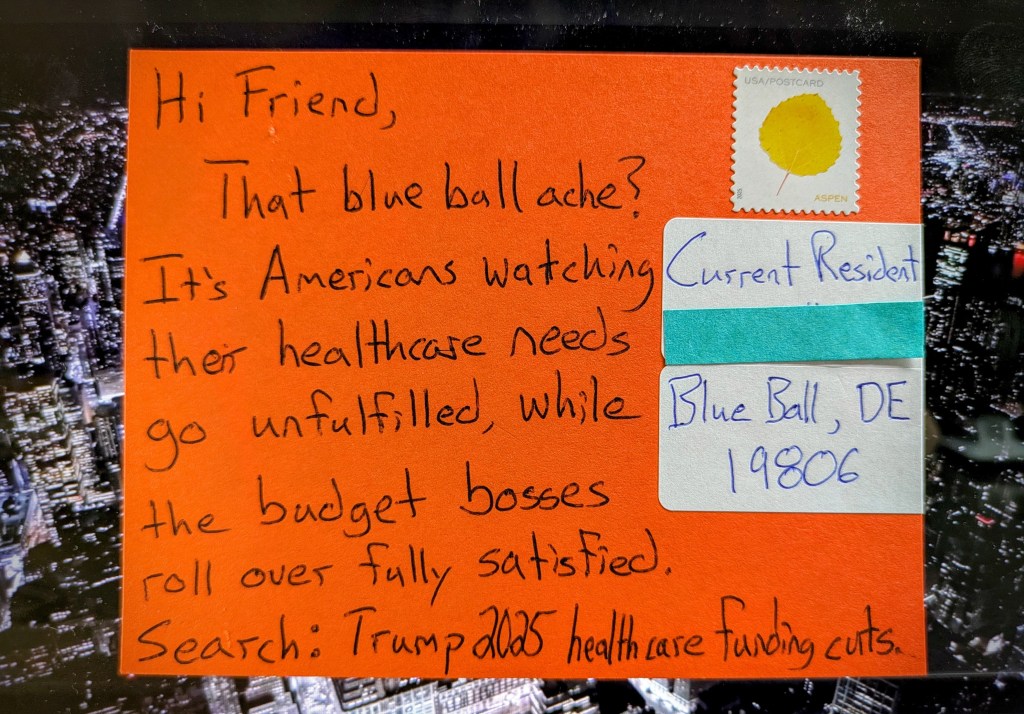
    The proposed 2025 healthcare cuts, as outlined in the one big beautiful bill, were a massive shift. It boils down to two things: Medicaid and public health.

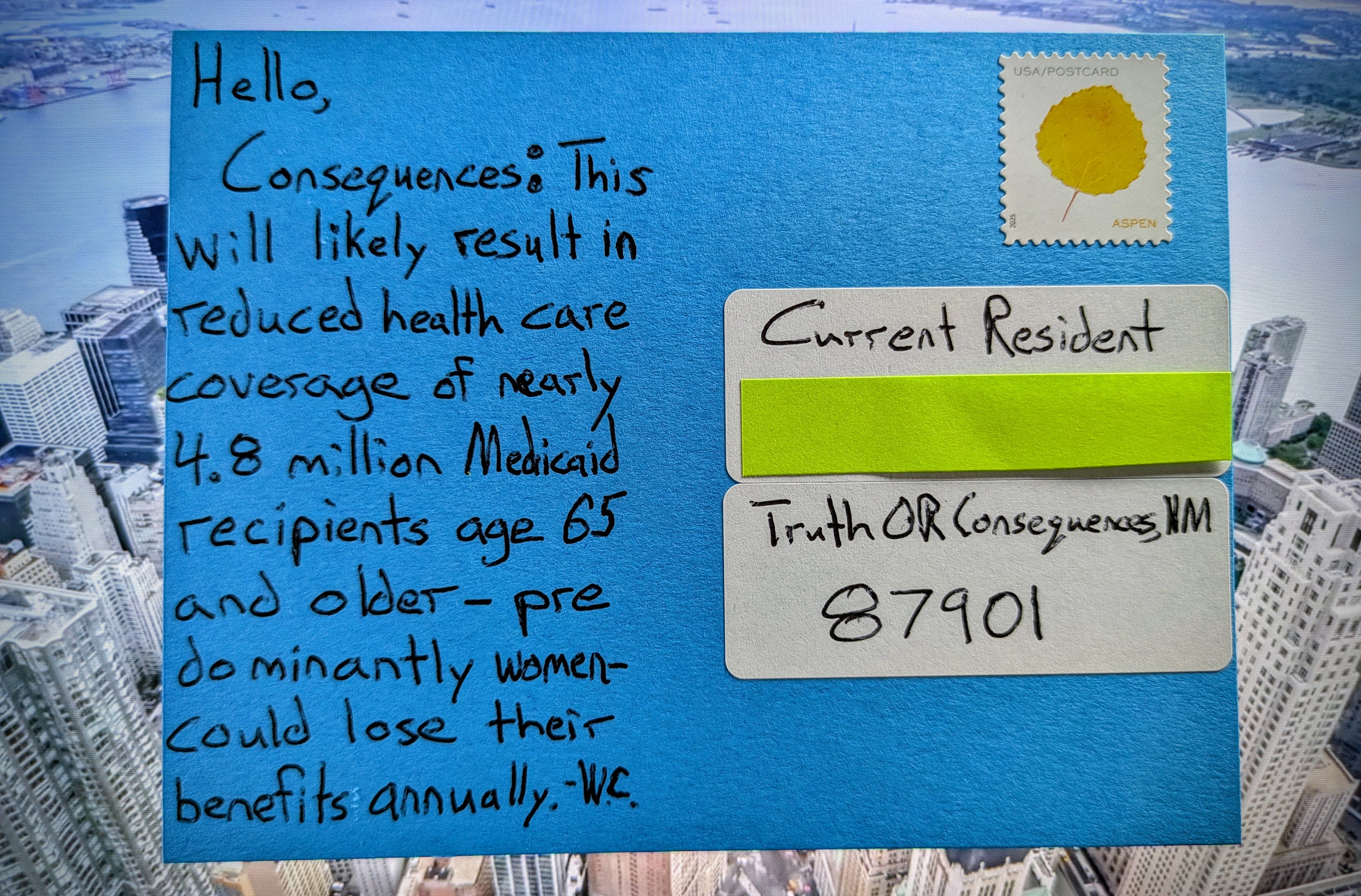
    The biggest target, Medicaid,-the safety net for the poor, the elderly, and the disabled-aimed at slashing over $1 trillion primarily by introducing work requirements, making it harder for eligible people to get healthcare.

    Then you have the public health agencies like the CDC and the NIH, lined up for cuts, cutting disease prevention programs.

    On top of that, they allowed enhanced subsidies for the Affordable Care Act (ACA) Marketplace to expire, leaving millions facing rising premiums and dropping coverage.

    It’s about “eliminating waste,” but results in fewer insured, less research funding, and states left scrambling to pick up costs. It’s a huge burden shift from Washington onto the states, creating more problems than it solves. Get ready for a higher uninsured rate and more hospital closures.

    SOURCES

    https://equitashealth.com/blog/equitas-health-responds-to-1bbbs-unprecedented-cuts-to-medicaid-and-americas-healthcare-safety-net/

    https://globalbiodefense.com/2025/07/28/nih-budget-cuts-public-health-biomedical-research-crisis/

  • Truth Or Consequences – September 2025

    Truth Or Consequences – September 2025

    September 26, 2025

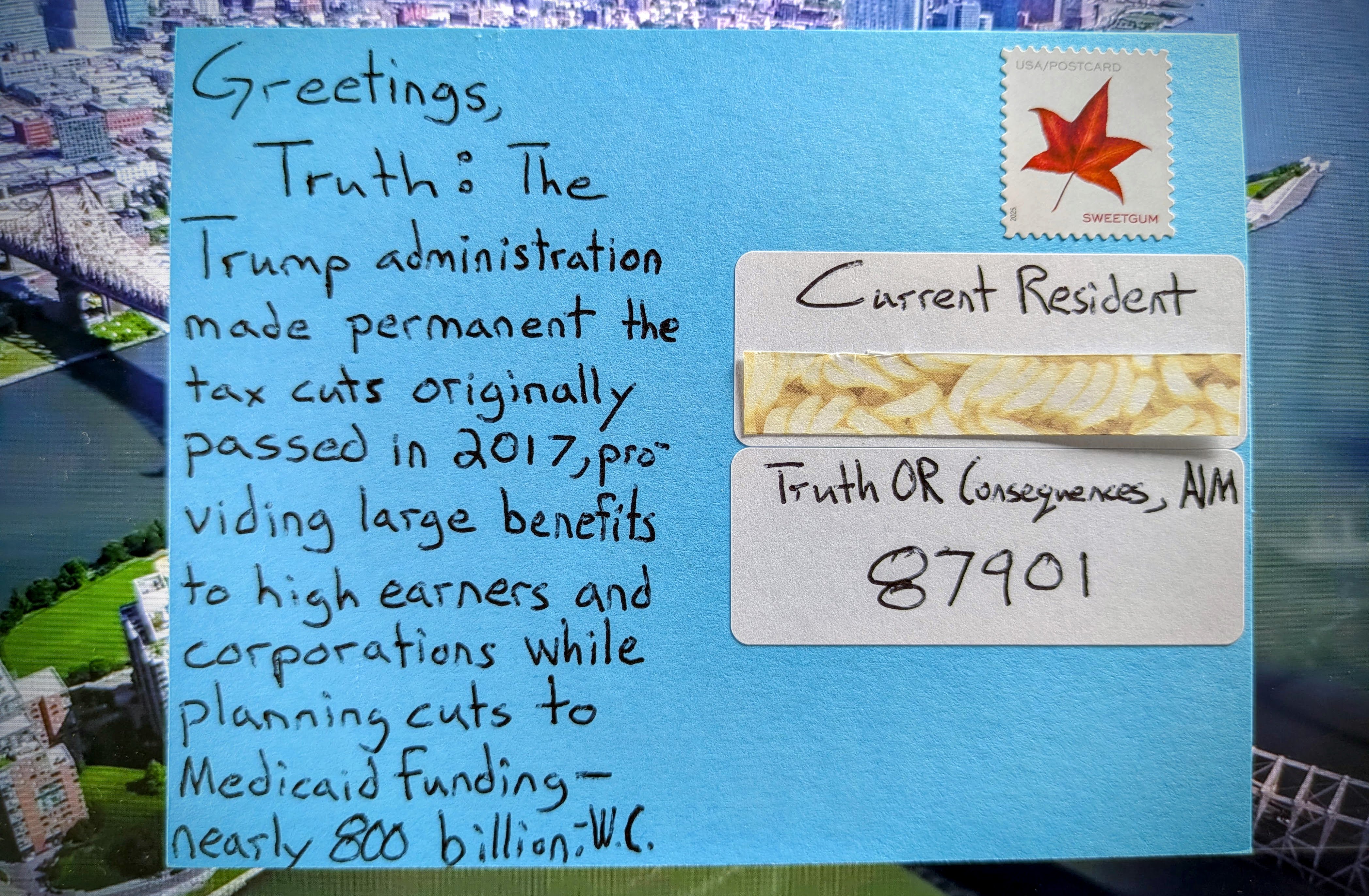
    The 2025 extension of Trump’s tax cuts mostly helps wealthy Americans and big businesses, locking in big breaks for folks making over $450,000 a year and corporations. Regular families get some relief with bigger standard deductions and a bump in child tax credits, but many low-income Americans see cuts in programs like Medicaid and food assistance and they may pay more out of pocket.

    Some lawmakers, especially those with investments in real estate and businesses (and their donors) benefit directly from the cuts, raising concerns that the whole thing’s designed to line pockets rather than help average people. The bill also makes it easier for the super-rich to dodge estate taxes when passing down wealth, widening the gap between the rich and everyone else.

    In the end, while it’s sold as a win for everyone, the real winners are the wealthy and politically connected—the rest get the leftovers and foot the bill.

    SOURCES

    https://taxpolicycenter.org/features/2025-tax-cuts-tracker

    https://www.cnbc.com/2025/03/03/who-benefits-from-trump-tax-cuts-and-jobs-act-extension.html

  • Tightwad, MO #019

    Tightwad, MO #019

    Sep 20, 2025 | Postscape #019

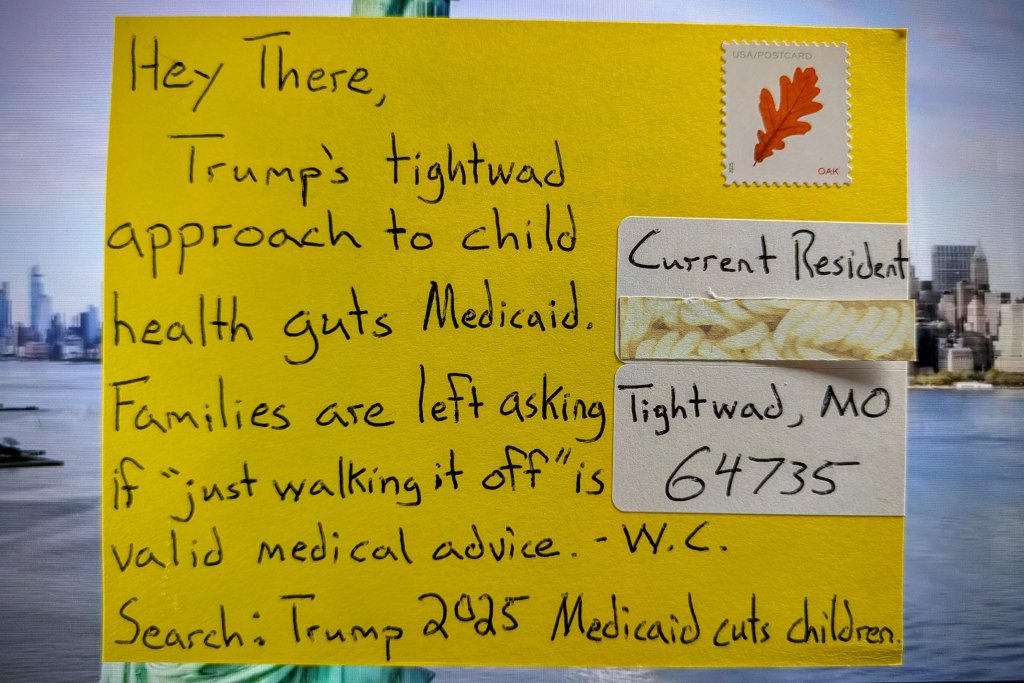
    The Trump administration has made significant cuts to federal Medicaid spending, reducing it by about $1 trillion over the next decade. Critics say these changes will harm children’s access to care, while increased administrative demands could make it harder for families with varying incomes to keep their coverage. These cuts aim to prevent fraud and protect vulnerable populations, yet it may result in fewer people covered. Children’s hospitals, which rely on Medicaid for a significant portion of their revenue, are at greater risk and the administrations failure to implement a policy for continuous health coverage for infants and toddlers is concerning. Opponents of the cuts continue to argue they will worsen health disparities, especially among children.

    Federal Medicaid cuts could hurt Tightwad, Missouri, by impacting low-income residents, children, and the elderly. These changes may cause local hospitals and clinics to struggle financially, possibly leading to reduced services or closures. This would make it harder for residents to access essential care, such as emergency services, home health, and mental health treatment. Low-income families might find it more difficult to maintain their children’s health insurance, creating gaps in care. Overall, the cuts could weaken the town’s healthcare system and harm its most vulnerable citizens.

    SOURCES

    Missouri Health Matters

    ANOL