Tag: trump

  • Party Pressure

    Party Pressure

    [Outgoing Mail]

    [Dec 09, 2025]

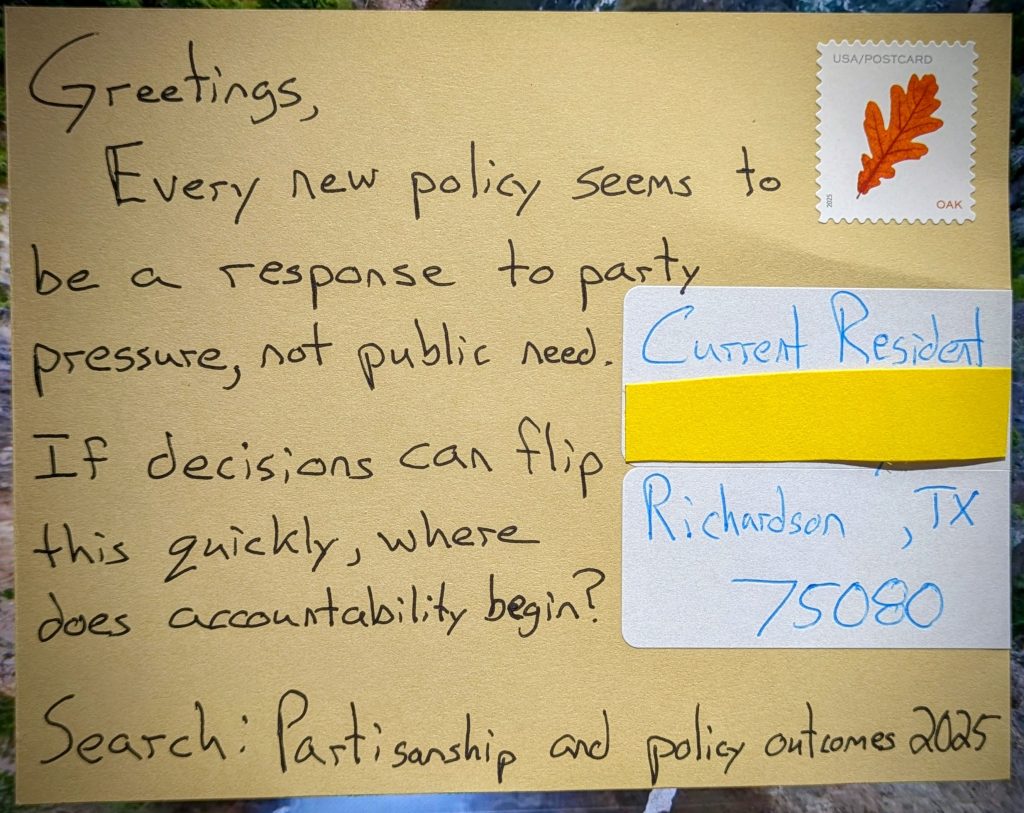
    Congress is more divided and partisan than ever, leading to slow progress on the big issues that matter most to regular people. Republicans control both the House and Senate, but with extremely slim majorities—the House has only a five-seat Republican edge, and the Senate just a few seats more. Because the margins are so tight, party members rarely cross the aisle to work with the other side. Instead, politicians spend more time fighting, blocking each other’s plans, and focusing on decisions that mostly please their most loyal supporters. This constant back-and-forth makes it hard for Congress to pass meaningful laws on things like healthcare costs, border security, or fixing roads, which leaves many Americans feeling frustrated and ignored.

    For Texans, this gridlock in Congress can be felt in their everyday lives. When lawmakers in Washington argue instead of act, essential funding for Texas schools, highways, and disaster recovery gets delayed or lost. For example, families who are still recovering from floods or severe storms depend on quick federal help, but political fighting can slow disaster relief payments. Texas farmers, oil workers, and small business owners also face uncertainty because Congress can’t agree on stable trade policies, energy rules, or long-term tax plans. As a result, many Texans feel that Congress is more interested in winning political games than in solving the real problems that hit home. This lack of progress has left people in Texas waiting for solutions that never come, deepening the sense that Washington doesn’t have their backs.

    [Sources]

    https://www.pewresearch.org/short-reads/2024/12/17/slim-majorities-have-become-more-common-in-the-us-house-and-senate/

    https://about.bgov.com/insights/congress/balance-of-power-in-the-u-s-house-and-senate/

    https://en.wikipedia.org/wiki/119th_United_States_Congress

    https://www.apmresearchlab.org/us-house-senate-control-2025

    .

    [Share | Subscribe | Follow]

    Instagram

    BlueSky

    X

    Pinterest

    Truth Social

    .

  • Keep Selling

    Keep Selling

    [Outgoing Mail]

    Nov 07, 2025

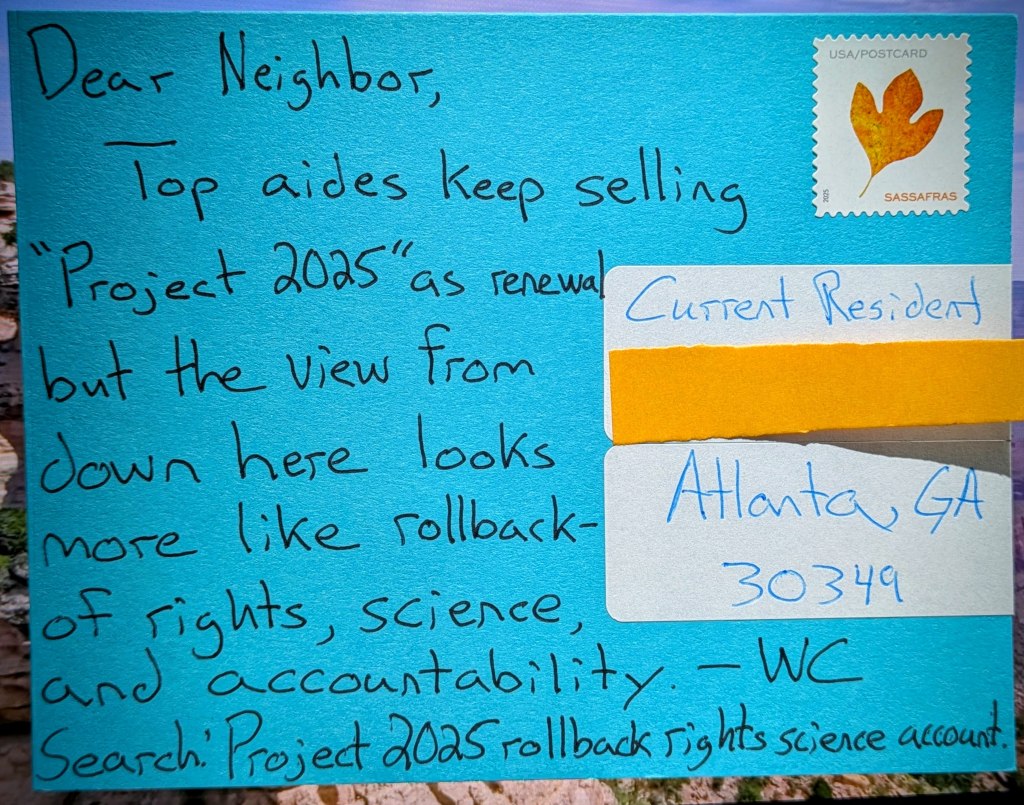
    Project 2025 has caused a sharp rollback in scientific research, human rights protections, and government accountability, creating serious concern among experts and civic groups. Reports from the Union of Concerned Scientists and the American Institute of Physics show that the plan strips key science agencies—like the Department of Energy and NOAA—of their independent voices, cutting climate programs, closing advisory boards, and reducing transparency for environmental data. These changes weaken the public’s ability to get factual information about issues like pollution or weather threats. At the same time, civil rights organizations warn that Project 2025 gives the president almost unchecked power to dismiss career officials and override public oversight laws, turning once-independent institutions into political tools. The policy framework reduces accountability by dismantling ethics offices and civil service protections, leaving fewer safeguards against misuse of power.

    In Atlanta, Georgia, these rollbacks have hit especially hard in education and local civic life. Project 2025’s plans to shrink or eliminate the Department of Education have already reduced federal support for Title I schools in Atlanta, which serve mostly low-income students. Local school leaders warn that these cuts deepen inequality for families already struggling with limited access to resources. Civil rights advocates, including the Urban League of Greater Atlanta and members of Georgia’s congressional delegation, have held events and press conferences calling the agenda a “sledgehammer to democracy” because it erodes voting rights, women’s reproductive freedom, and protections for LGBTQ+ citizens. For many Atlantan activists and educators, the concern is not just losing federal funding or research—it’s losing the ability to hold powerful people accountable when their actions harm communities.

    SOURCES

    https://ulgatl.org/on-point-exclusive-unpacking-project-2025-in-real-time-with-the-urban-league-of-greater-atlanta/

    https://www.aip.org/fyi/project-2025-outlines-possible-future-for-science-agencies

    [Share & Follow]

    Instagram

    Pinterest

  • Boring, OR #029

    Boring, OR #029

    [Outgoing Mail]

    Oct 10, 2025 | Postscape #029

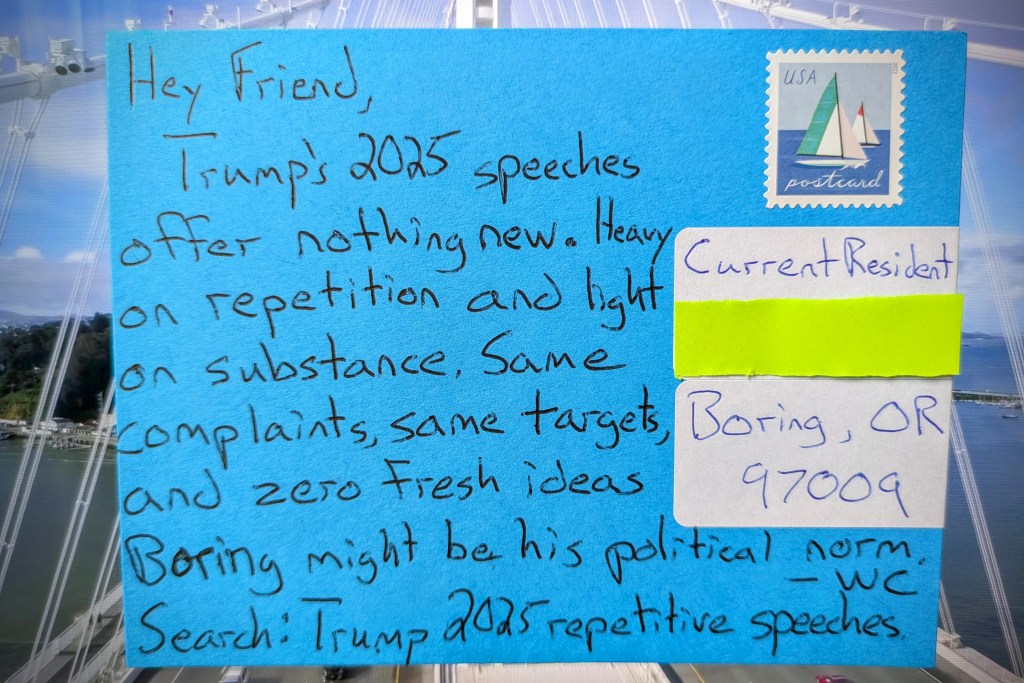
    Repetitive political speeches, such as those by President Trump, can harm the average American by affecting public understanding..

    Repetition makes statements sound more credible, a phenomenon called the “truth effect.” When political leaders repeat claims—even if they are misleading or inaccurate—people are more likely to believe them simply due to familiarity. This can distort public understanding of important facts and issues, causing average citizens to shape their opinions based on repeated, simplified messages.

    Repetitive messaging simplifies complex political topics, leading to polarization and stronger partisan attitudes, causing public debate to be more divisive and less informative. The average American may face a less informed public, polarized friends/family, and are at risk of being influenced by misleading claims.

    The good news is that research shows excessive repetition, especially of negative statements, eventually reduces the perceived credibility of both the message and the speaker, leaving people tired or apathetic.

    SOURCES

    https://news.vt.edu/articles/2025/03/2025-trump-address-joint-congress-session-expert.html

    https://theconversation.com/we-analyzed-9-years-of-trump-political-speeches-and-his-violent-rhetoric-has-increased-dramatically-238962

  • Forks, WA #026

    Forks, WA #026

    [Outgoing Mail]

    Oct 05, 2025 | Postscape #026

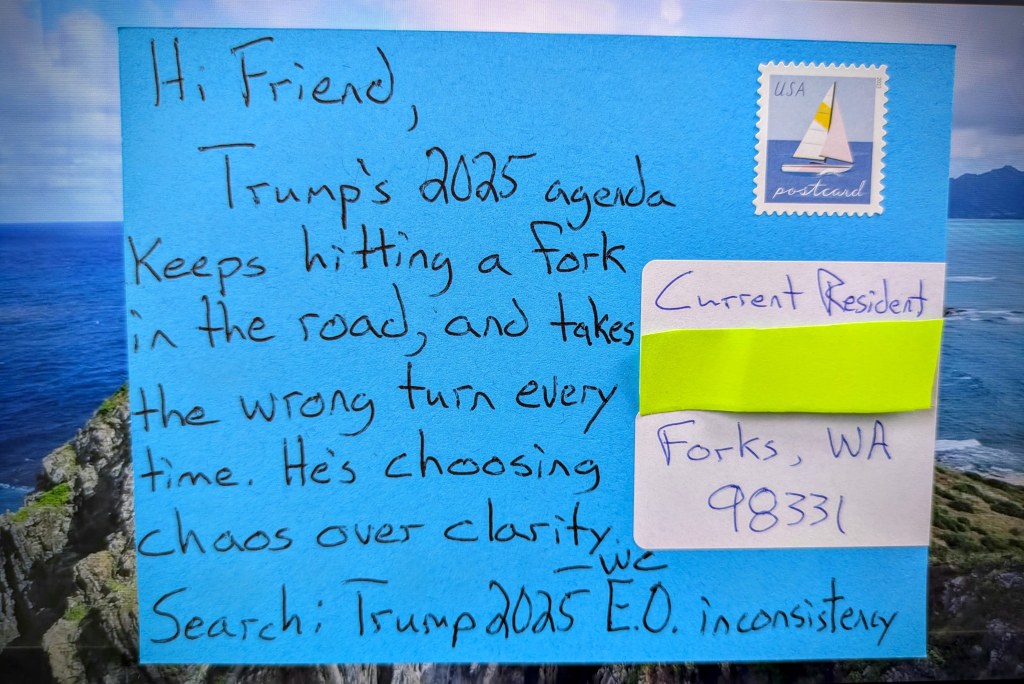
    President Trump’s 2025 executive orders include controversial changes affecting environmental policies and land management, creating implementation challenges.

    In rural Forks, Washington, there are worries about an order that opens public lands, including forests, to development by removing protections like the Roadless Area Conservation Rule, leading to strong opposition due to increased wildfire risks and environmental damage. Another order seeks to improve wildfire prevention through collaboration among federal, state, and tribal groups, important for areas prone to wildfires.

    Additionally, some actions challenge local climate laws, weakening state protections needed for sustainable development. Economic orders could also indirectly affect local economies.

    Overall, these inconsistencies in Trump’s orders create uncertainties for rural communities like Forks, WA.

    SOURCES

  • Judges Lean Partisan

    Judges Lean Partisan

    Sep 21, 2025

    Samuel Alito, known for reliable votes supporting right-wing and executive power positions, has been scrutinized over undisclosed trips and connections to conservative advocacy groups (as well as flag controversies involving his household). He is statistically the court’s most conservative justice. [1]

    Justice Clarence Thomas is extremely conservative, nearly always aligns with Alito and is a frequent leader of the most partisan bloc. His repeated headlines about unreported gifts, luxury trips, and financial benefits from conservative donors have raised major ethical concerns in 2024 and 2025, with Senate hearings and investigative journalism coverage. [2]

    Neil Gorsuch often aligns with the conservative bloc of Thomas and Alito on key issues. Brett Kavanaugh and Amy Coney Barrett are also conservative but are perceived as somewhat more moderate. John Roberts, the Chief Justice, has shifted right but remains the likely conservative swing vote, occasionally siding with liberals in close cases.

    By contrast, Sonia Sotomayor, Elena Kagan, and Ketanji Brown Jackson are seen as left-leaning but have mostly stayed out of major ethics controversies. Their dissenting opinions align with Democratic views.

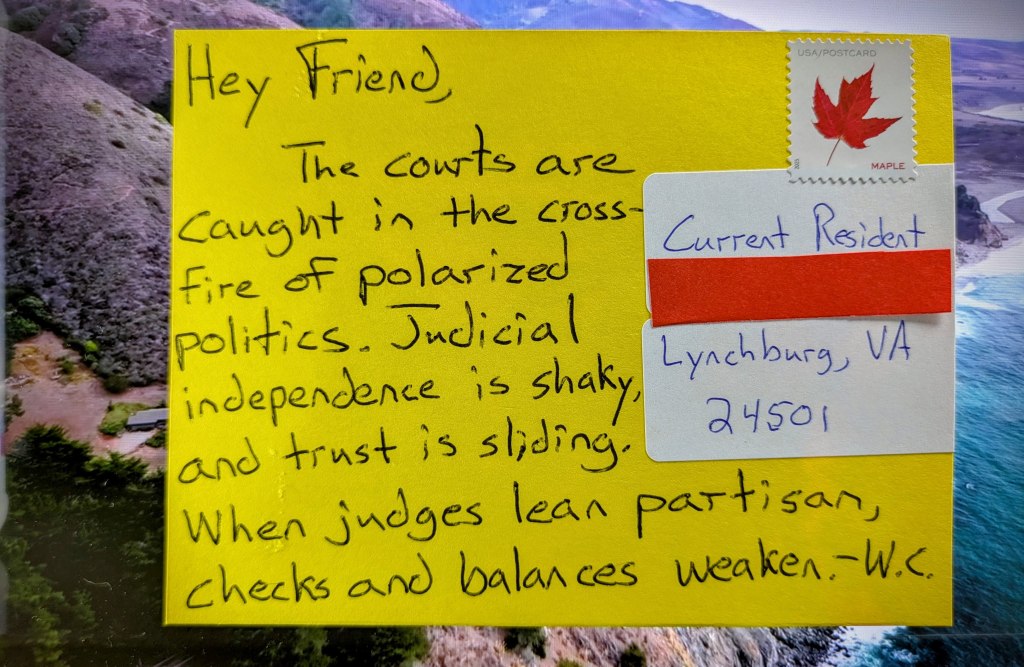
    The combination of ethical concerns and partisan leanings fuels distrust and threatens the Court’s role as a fair, impartial guardian of democracy. The consequences of this erosion are felt by everyday Americans in their rights, protections, and faith in government institutions.

    SOURCES

    https://www.newsweek.com/clarence-thomas-samuel-alito-ethics-violations-found-new-senate-probe-2004585

  • Tightwad, MO #019

    Tightwad, MO #019

    Sep 20, 2025 | Postscape #019

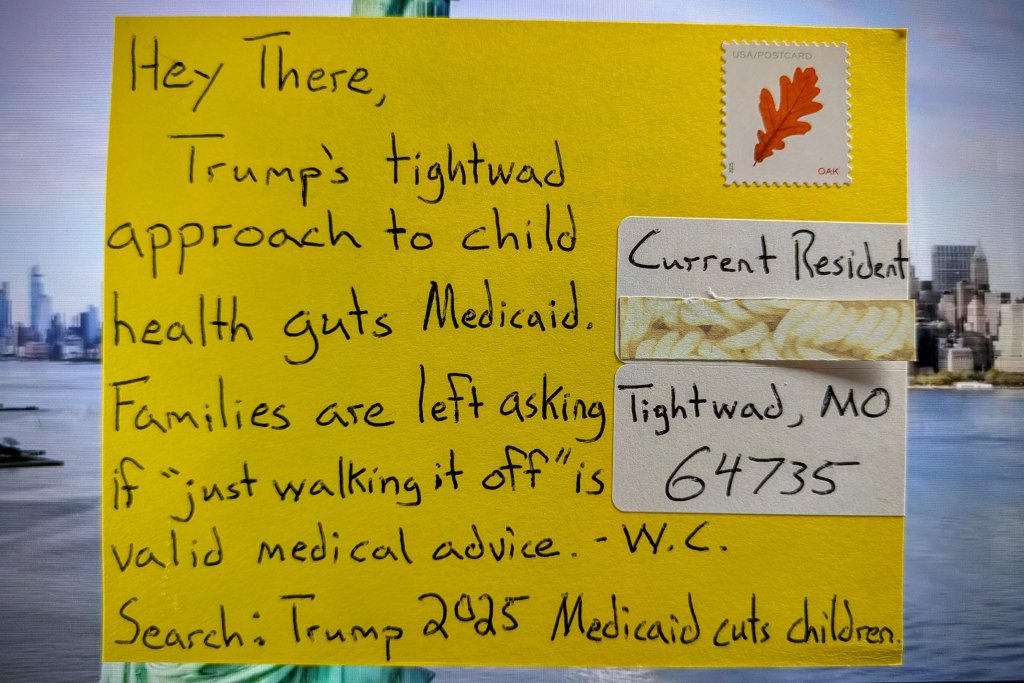
    The Trump administration has made significant cuts to federal Medicaid spending, reducing it by about $1 trillion over the next decade. Critics say these changes will harm children’s access to care, while increased administrative demands could make it harder for families with varying incomes to keep their coverage. These cuts aim to prevent fraud and protect vulnerable populations, yet it may result in fewer people covered. Children’s hospitals, which rely on Medicaid for a significant portion of their revenue, are at greater risk and the administrations failure to implement a policy for continuous health coverage for infants and toddlers is concerning. Opponents of the cuts continue to argue they will worsen health disparities, especially among children.

    Federal Medicaid cuts could hurt Tightwad, Missouri, by impacting low-income residents, children, and the elderly. These changes may cause local hospitals and clinics to struggle financially, possibly leading to reduced services or closures. This would make it harder for residents to access essential care, such as emergency services, home health, and mental health treatment. Low-income families might find it more difficult to maintain their children’s health insurance, creating gaps in care. Overall, the cuts could weaken the town’s healthcare system and harm its most vulnerable citizens.

    SOURCES

    Missouri Health Matters

    ANOL

  • Nothing, AZ #018

    Nothing, AZ #018

    Sep 12, 2025 | Postscape #018

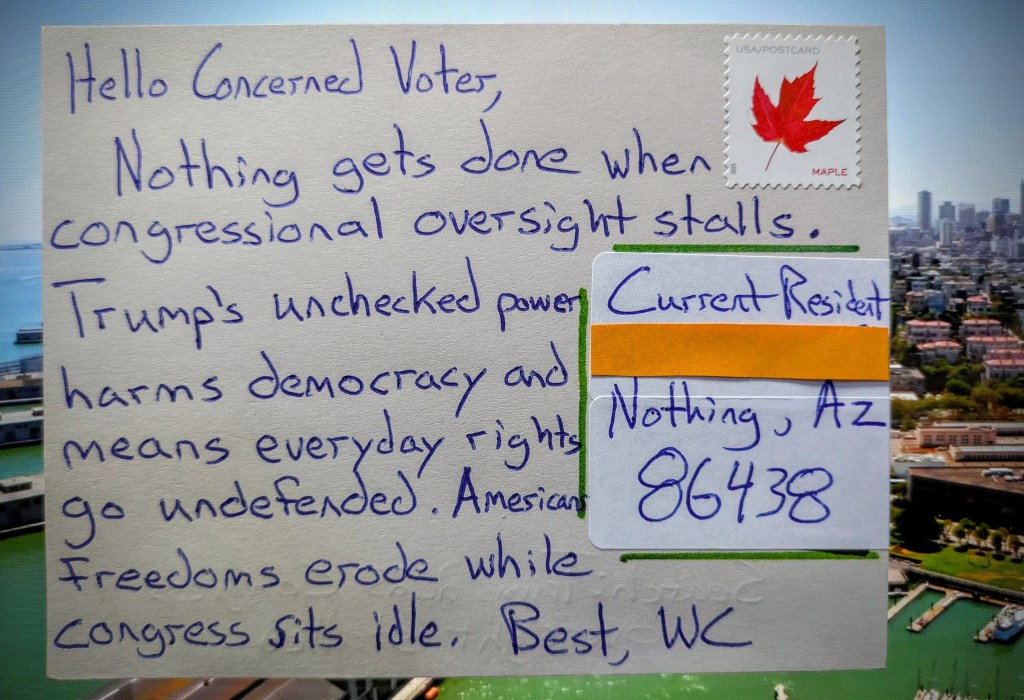
    As of late 2025, congressional oversight of the Trump administration is plagued by delays and partisan disputes, especially regarding Jeffrey Epstein-related files. Tensions increased after a controversial letter from the President was found in Epstein’s birthday book. The President’s executive order to close the Department of Education faced little resistance from Congress, raising doubts about oversight effectiveness. The administration’s investigations are seen as distractions. Concerns about transparency remain due to the Department of Justice’s lack of cooperation with oversight requests and ongoing legal disputes related to executive orders on education and civil rights, highlighting tensions between government branches.

    Stalled congressional oversight and new policies from the administration could hurt everyday Arizonans. Proposed cuts to federal funding for Medicaid and SNAP threaten healthcare and food security for many, including over 1 million children. The removal of clean energy tax credits risks billions in investments and thousands of jobs, leading to higher future energy costs. Additionally, new tariffs on imported goods may raise prices on everyday items, while a federal freeze on research grants could negatively impact local universities and tribal communities, affecting important projects and services. Overall, these policy changes could result in economic uncertainty, higher living costs, and reduced access to essential social services.

    SOURCES

    E&E News

    KJZZ