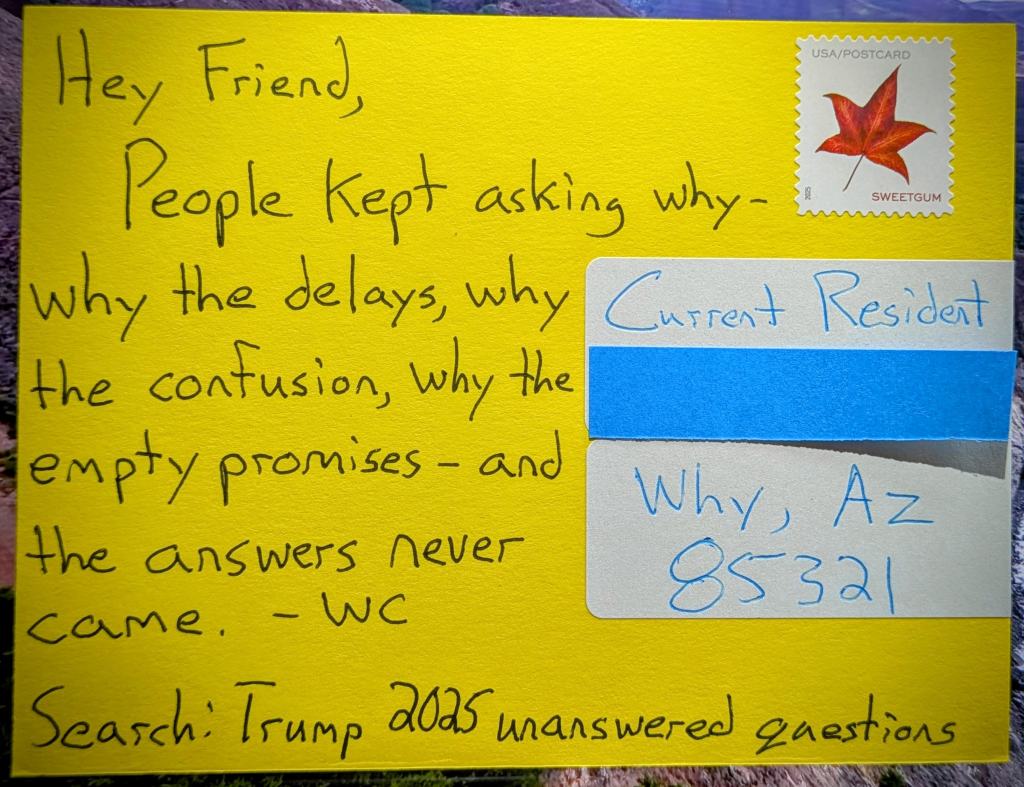
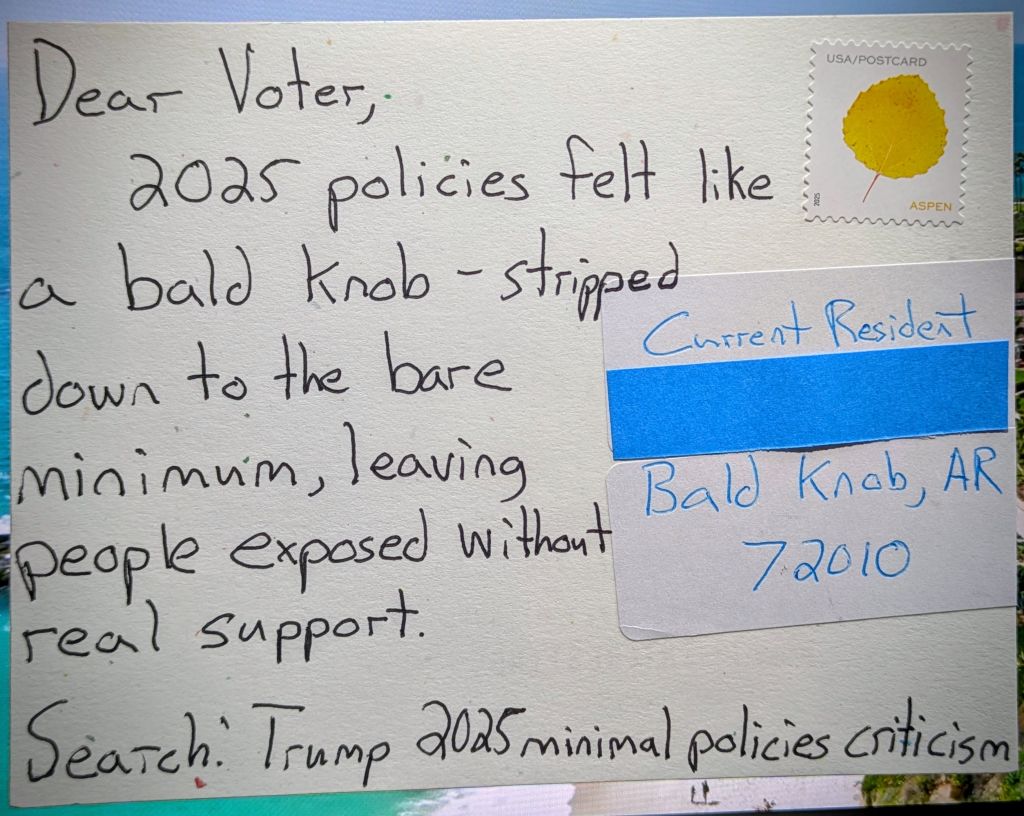
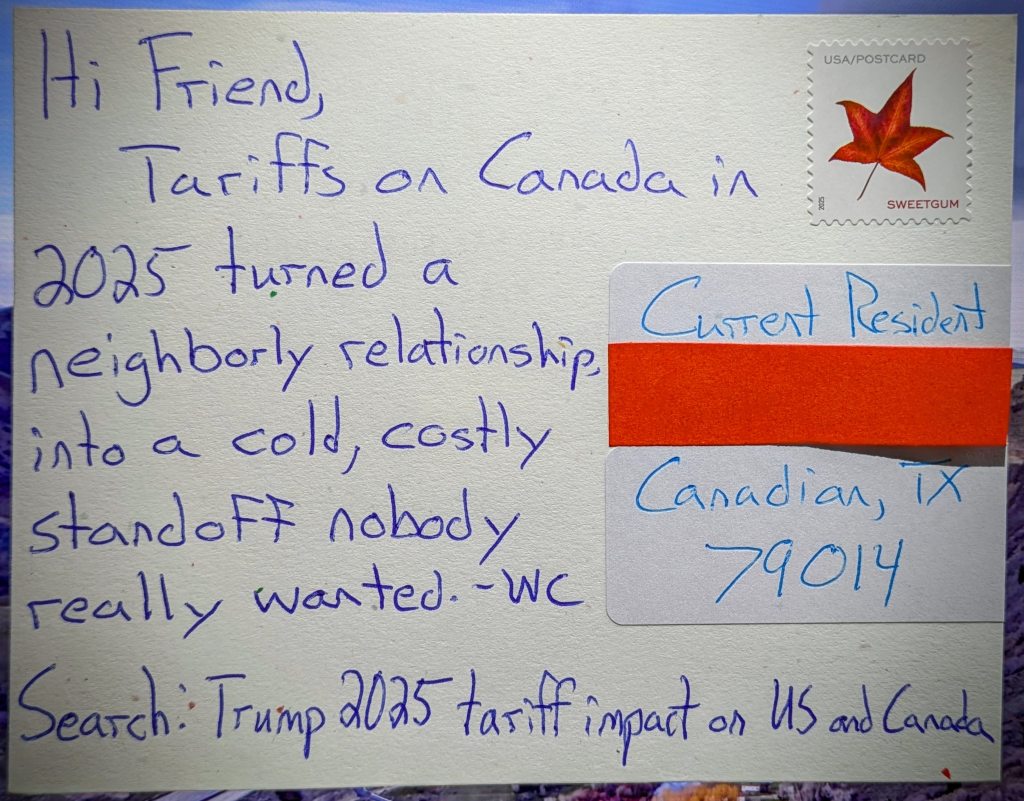
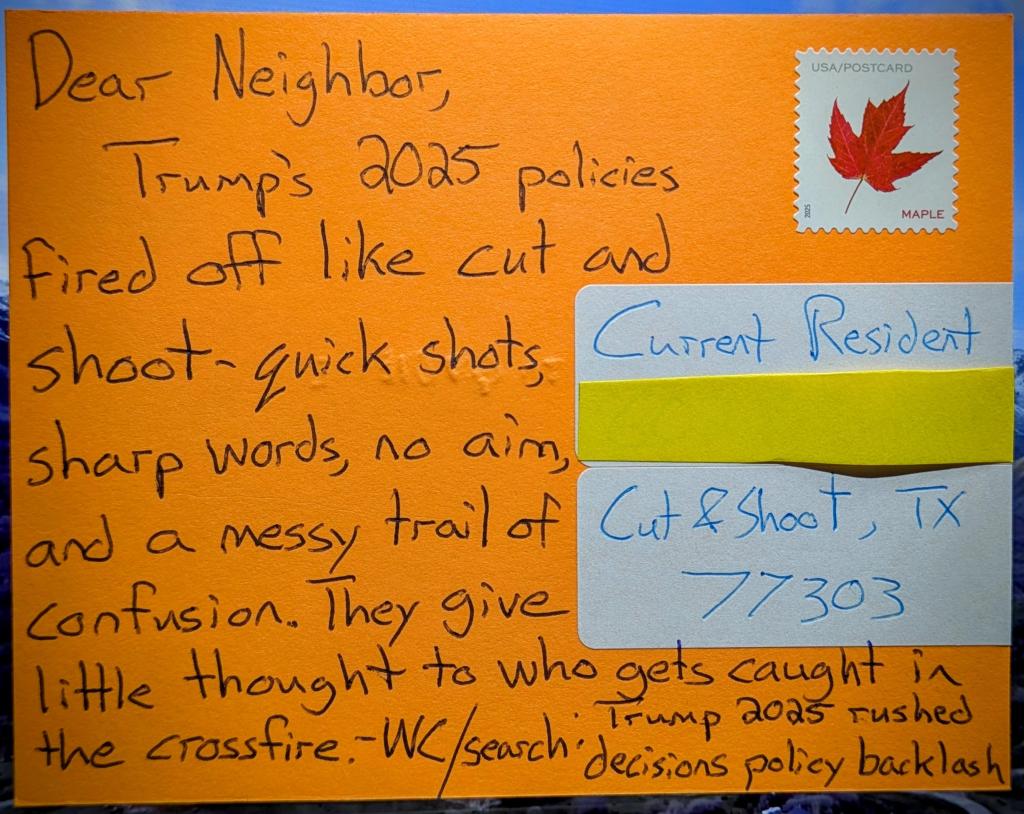
Send a Crosscard—an anonymous postcard—to your MAGA friends and family, challenging them to pause and truly reconsider the movement. Every Crosscard is a bold invitation to reflect, crafted with urgency and defiance, rejecting complacency and urging them into genuine reevaluation.
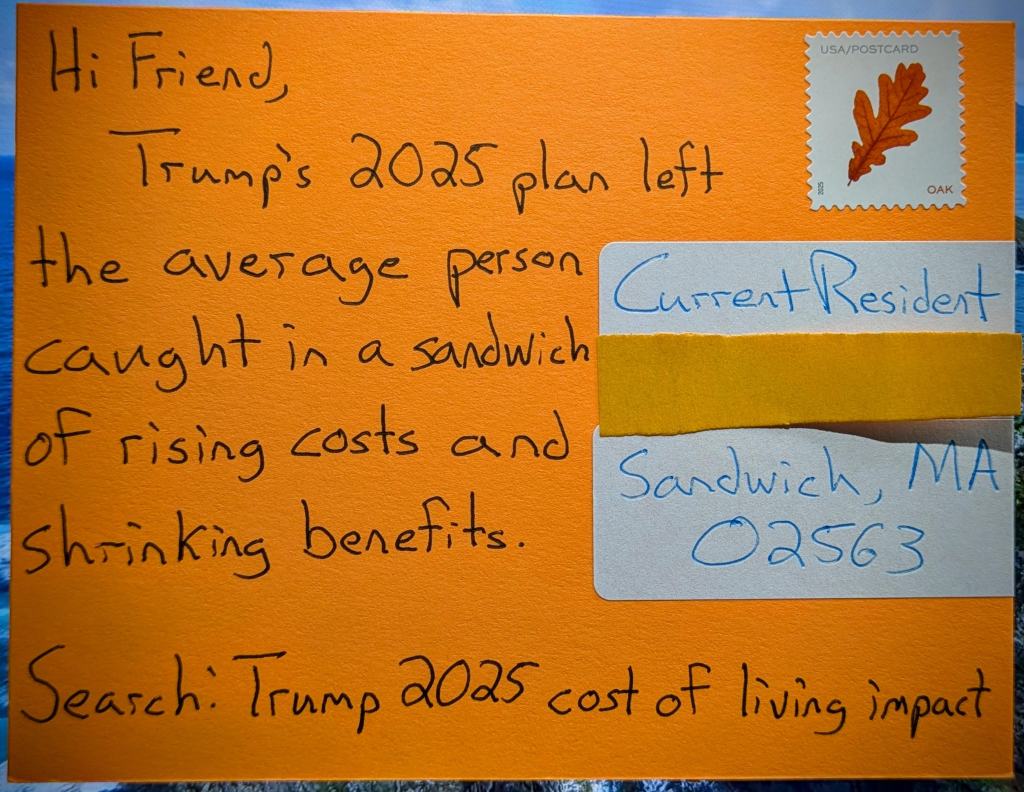
A nonpartisan policy tracker cataloged Trump’s 2025 executive actions on housing, food, and energy, noting that broad tariffs on building materials and consumer goods risk driving up home prices, renovation costs, and key household items.
It also highlights moves like holding back $500 million for food banks and threatening transit funding, which advocates warn will increase costs for low‑income families and urban commuters, and urge Congress to intervene.
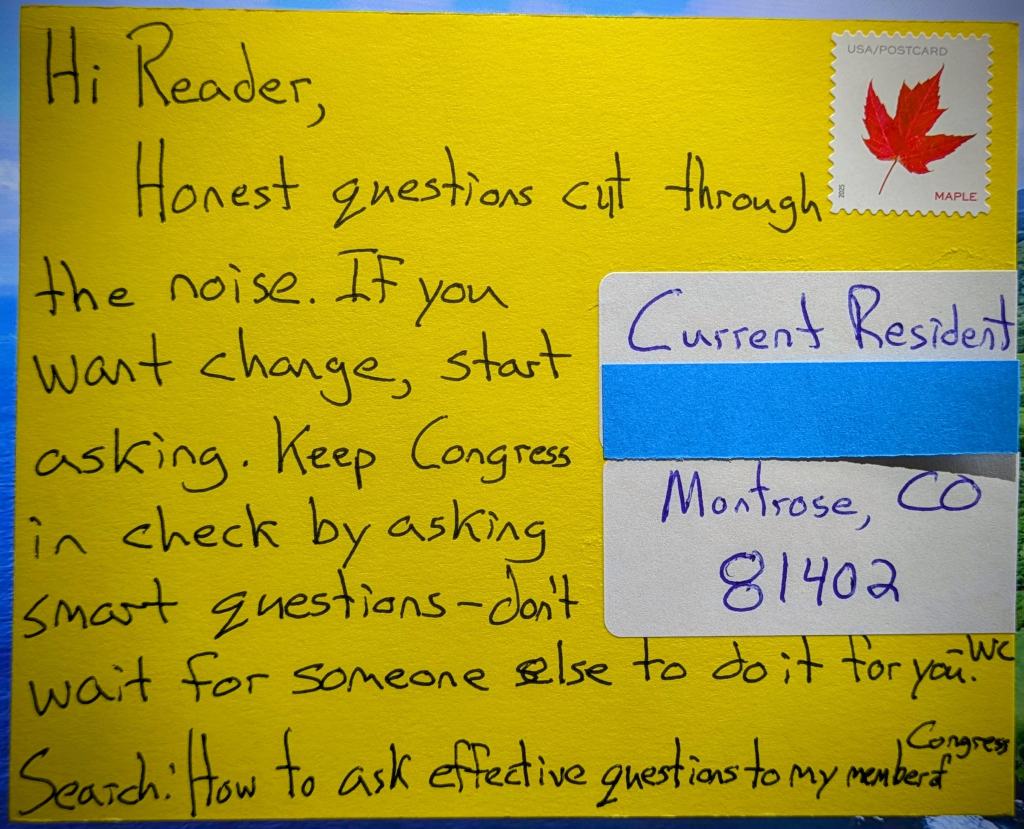
Nearly two dozen leading civil rights organizations sent a joint letter urging members of Congress to oppose a Trump administration memo that threatened D.C.’s home rule and autonomy, framing it as part of a broader pattern of federal overreach and a “threat to democracy nationwide.
The groups pressed lawmakers to vote against any legislation or executive actions that undermine D.C.’s democratic institutions, directly calling on Congress to serve as a check on Trump’s authoritarian-style power grabs.
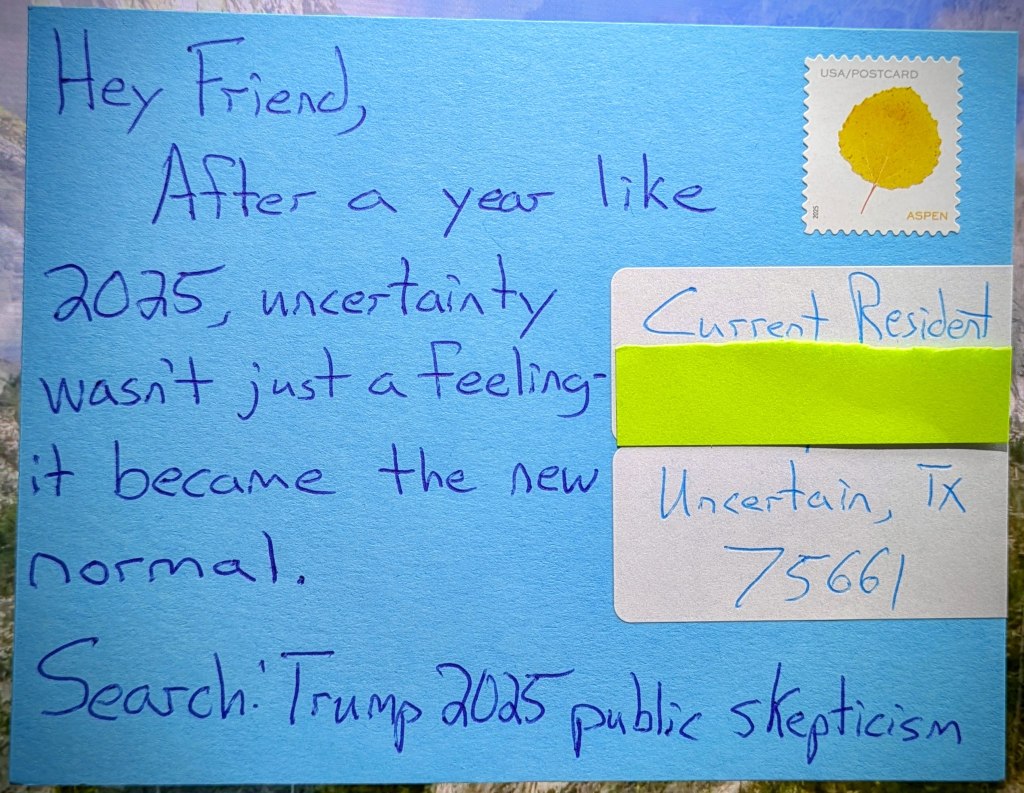
Public skepticism toward the Trump administration in 2025 is running high across America. Most Americans—nearly 55%—disapprove of how President Trump is handling his job, and his approval ratings are lower than those of almost any recent president at a similar point in their term. People are seeing a government that seems more interested in fighting than solving problems, and many don’t trust Trump’s decisions, especially about the economy, foreign affairs, tariffs, and the government shutdown.
Across the country, this skepticism shows up in polls and daily life. Only 41% of Americans approve of Trump’s work overall, and on issues like inflation, trade, and dealing with Israel and Ukraine, even fewer are confident—approval drops to 36–38% for these topics. Many blame Trump and Congress together for ongoing government dysfunction, and nearly half of all Americans believe Trump is trying to exercise more power than previous presidents, which most view as bad for the country. In short, skepticism is everywhere—in homes, workplaces, and communities—because people want stability, honesty, and leadership they feel they can trust, but they see too much chaos and conflict coming from Washington in 2025.
President Trump faces a mountain of unanswered questions about his actions, decisions, and promises—and these gaps are fueling confusion and frustration across the country. Many Americans still don’t have clear answers about the details behind his trade wars, border policies, attacks on diversity programs, or claims of ending foreign conflicts “on day one”. For example, people want to know when and how new tariffs will be enforced, whether his administration overstepped legal boundaries with abrupt firings of independent agency watchdogs, and if classified information was carelessly shared in high-level chats, risking security. Critics point out that while sweeping executive orders grab headlines, they often gloss over how and when these bold promises will actually work, or who will be held accountable when things go wrong.
Ordinary Americans are left in the dark on crucial issues—from how big changes in government agencies will affect their benefits and rights, to whether foreign deals and military decisions are being made safely and with real oversight. With the Supreme Court taking up cases about presidential power and government overreach, and Congress demanding investigations into security lapses and policy changes, confusion is widespread and trust in leadership is low. The bottom line: President Trump’s 2025 record is defined as much by what hasn’t been answered as by what’s been done, leaving millions of Americans waiting for transparency, accountability, and clear direction from Washington.
President Trump’s policies have faced widespread criticism for being minimal and disappointing, especially given the hype around bold changes during his campaign. Critics say many of his promised big ideas have boiled down to small, symbolic actions without real solutions for the country’s urgent problems. For example, while Trump has aggressively pushed to cut federal agencies and reduce government size, there has been little effective planning on how critical services for everyday Americans would continue smoothly.
Many experts note that Trump’s minimal approach risks leaving workers, consumers, and vulnerable communities behind. Federal scientists and regulators have seen protections rolled back, raising concerns about safety and fairness. Meanwhile, Trump’s inconsistent backing of his plans has caused confusion and frustration among businesses and workers who need steady policies to plan their futures. Americans increasingly say that instead of improving government performance, Trump’s policies have worsened the situation, deepening inequalities and undermining trust in leadership. In short, the criticism is that Trump’s 2025 agenda has too often been more about cutting and symbolic gestures than delivering meaningful change for everyday people
President Trump’s tariffs have slammed the US and Canadian economies, leaving everyday people feeling the squeeze at the grocery store, in the factory, and across the supply chain. The average price of goods in the US rose by about 1.3% due to these tariffs, costing the average household roughly $1,500 a year. These steep costs didn’t just hit consumers—they also jammed up supply chains, slowed down factories, and risked jobs, especially in sectors dependent on cross-border trade.
For Canada, the story is just as tough. In retaliation, Canada slapped a 25% surtax on many American goods, covering everything from agricultural products to industrial materials.
President Trump’s administration has faced significant backlash for rushed decisions in policy-making that often lack careful planning or adequate input from experts. These quick moves include sweeping executive orders targeting federal agencies, diversity programs, and legal institutions, which have sometimes been overturned or challenged in court due to their hasty execution and legal flaws. For instance, efforts to dismantle diversity, equity, and inclusion initiatives sparked lawsuits and pushback from corporations and civil rights leaders, who argue that the administration’s rapid crackdown jeopardizes workplace fairness and inclusion. Likewise, sudden cuts to election security funding and threats against election officials weakened critical safeguards and drew sharp criticism.
This pattern of rushed policymaking has led to confusion and instability in government services, making it harder for ordinary Americans to rely on consistent rules or protections. The rapid changes leave agencies scrambling to adjust, and communities uncertain about their rights and resources. Moreover, the backlash from these quick decisions often mobilizes critics and legal defenders, creating a cycle of political conflict that slows down progress. The result is a climate where short-term political gains are prioritized over long-term solutions, generating frustration among the public and raising concerns about the erosion of key democratic institutions and workers’ protections.
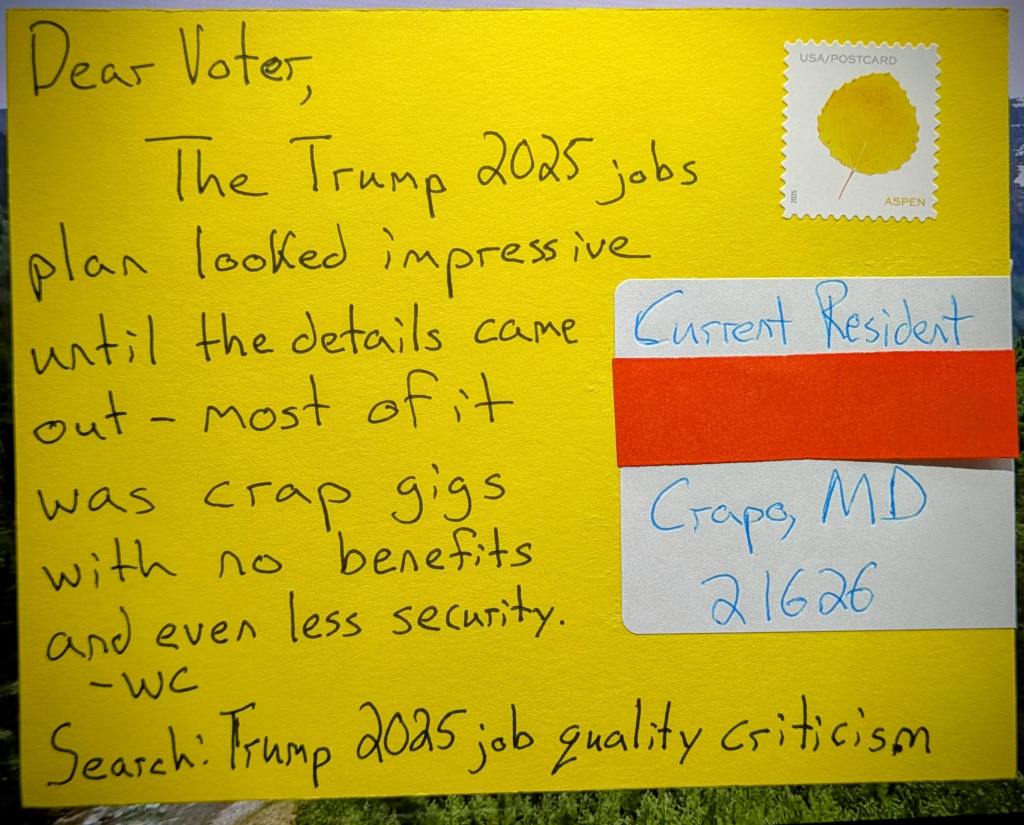
President Trump’s 2025 jobs plan, known as “America’s Talent Strategy,” has the potential to boost job opportunities and prepare the American workforce for the future, especially in industries like manufacturing, artificial intelligence, and skilled trades. The plan focuses on creating employer-driven training programs, expanding apprenticeships, and using AI-powered tools to help workers find career paths that match their skills and local job needs. It aims to modernize a complicated system by streamlining federal workforce programs and aligning education with real job opportunities, which could help millions of Americans, including those in states like Maryland, access better-paying careers without always needing a traditional college degree.
However, despite these promising goals, there are real challenges to making sure these benefits reach everyday workers instead of just businesses or already advantaged groups. Federal workforce programs have faced staffing cuts and funding reductions, which risk limiting access for low-income or marginalized workers who need more support to get training and better jobs. The current patchwork of separate programs also makes it hard for jobseekers to navigate, and integrating these into a simpler, more effective system will take time and effort. So, while the plan has the potential to help many Americans succeed in the changing economy, it still needs strong implementation and attention to fairness to ensure its gains are widely shared—not just concentrated at the top.
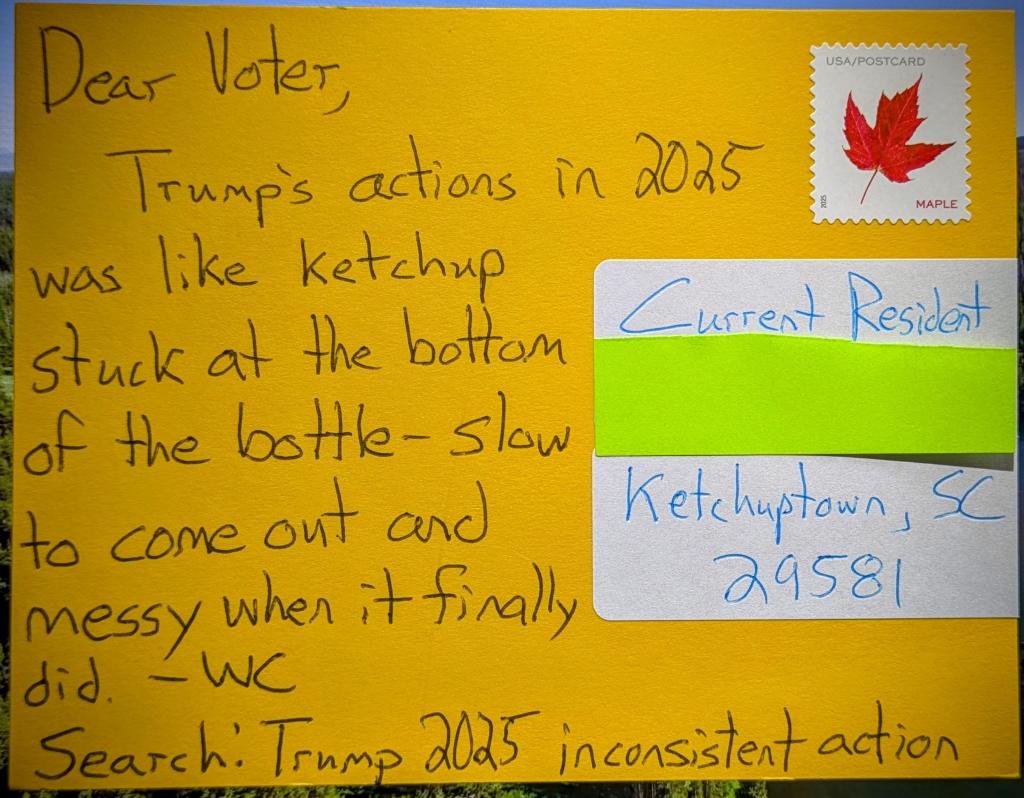
Residents of South Carolina are experiencing the effects of Trump’s inconsistent actions and policies, which create confusion and uncertainty in their daily lives. Trump publicly disavowed involvement with Project 2025, a detailed conservative policy blueprint, while many of its proposals have quietly shaped his executive orders almost word-for-word. This flip-flopping between disavowal and implementation causes frustration among citizens as promises and policies don’t always match up.
For example, Trump signed an executive order to dismantle the Department of Education, aligning with Project 2025’s goal, but this move requires Congressional approval to fully take effect, leaving schools and educators in South Carolina uncertain about federal funding and support. Similarly, Trump rolled back diversity and equity programs in federal agencies, sparking protests locally yet also abruptly reversing some of these moves after public backlash, which added to the confusion. Rapid shifts like these create instability for South Carolina’s public workers, healthcare providers, and businesses that must adapt to changing federal rules on short notice. The inconsistency also weakens trust in leadership, making it harder for residents to plan for the future or depend on steady government support when needed.