Author: William Concernwell

  • Party Pressure

    Party Pressure

    [Outgoing Mail]

    [Dec 09, 2025]

    Congress is more divided and partisan than ever, leading to slow progress on the big issues that matter most to regular people. Republicans control both the House and Senate, but with extremely slim majorities—the House has only a five-seat Republican edge, and the Senate just a few seats more. Because the margins are so tight, party members rarely cross the aisle to work with the other side. Instead, politicians spend more time fighting, blocking each other’s plans, and focusing on decisions that mostly please their most loyal supporters. This constant back-and-forth makes it hard for Congress to pass meaningful laws on things like healthcare costs, border security, or fixing roads, which leaves many Americans feeling frustrated and ignored.

    For Texans, this gridlock in Congress can be felt in their everyday lives. When lawmakers in Washington argue instead of act, essential funding for Texas schools, highways, and disaster recovery gets delayed or lost. For example, families who are still recovering from floods or severe storms depend on quick federal help, but political fighting can slow disaster relief payments. Texas farmers, oil workers, and small business owners also face uncertainty because Congress can’t agree on stable trade policies, energy rules, or long-term tax plans. As a result, many Texans feel that Congress is more interested in winning political games than in solving the real problems that hit home. This lack of progress has left people in Texas waiting for solutions that never come, deepening the sense that Washington doesn’t have their backs.

    [Sources]

    https://www.pewresearch.org/short-reads/2024/12/17/slim-majorities-have-become-more-common-in-the-us-house-and-senate/

    https://about.bgov.com/insights/congress/balance-of-power-in-the-u-s-house-and-senate/

    https://en.wikipedia.org/wiki/119th_United_States_Congress

    https://www.apmresearchlab.org/us-house-senate-control-2025

    .

    [Share | Subscribe | Follow]

    Instagram

    BlueSky

    X

    Pinterest

    Truth Social

    .

  • Fairness Froze

    Fairness Froze

    .[Outgoing Mail]

    [Dec 7, 2025]

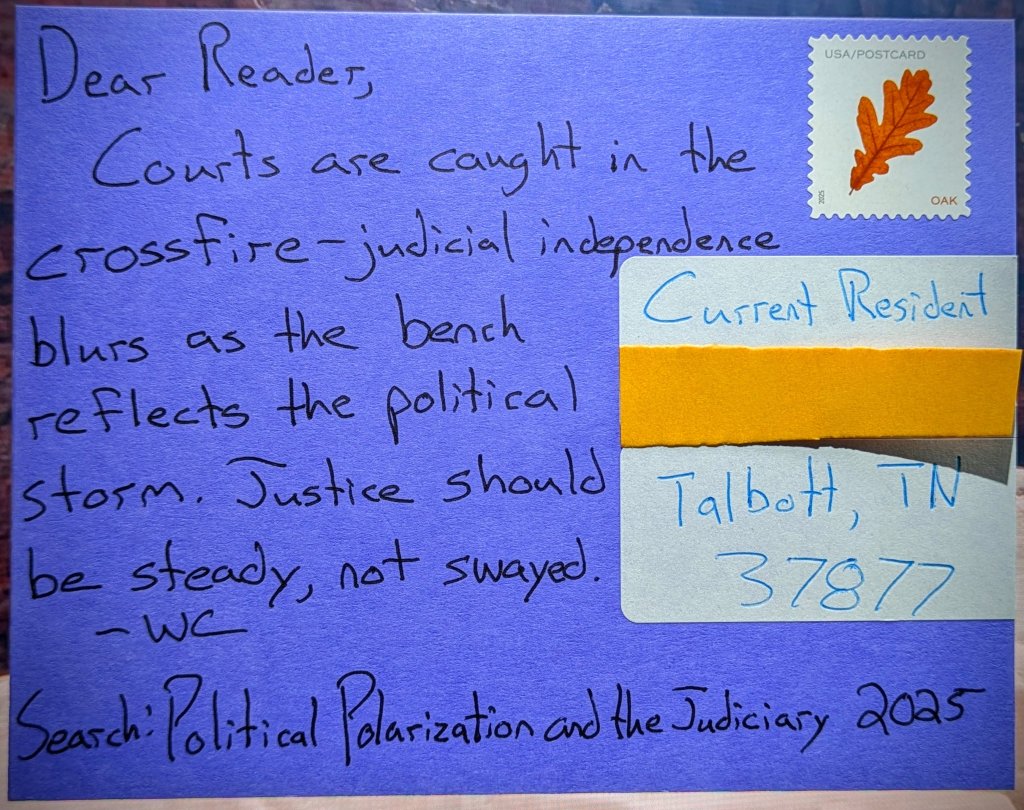
    The Supreme Court is deeply divided between two ways of thinking about the Constitution: “originalism” and “living constitutionalism.” Originalism means judges should only consider what the Constitution’s words meant when they were first written—like freezing its meaning in time, even when society changes. Living constitutionalism is the idea that the meaning can change as America changes; judges use today’s values and realities to make decisions about rights and laws. Right now, most Supreme Court justices call themselves originalists, arguing that this keeps judges tied to the people’s original intentions and stops courts from making up new rules. Living constitutionalists, on the other hand, say sticking only to old meanings makes it impossible to solve current problems when laws never imagined things like the internet or modern civil rights battles.

    For people in Georgia, the Supreme Court’s strong swing toward originalism can make life more unpredictable, especially around voting rights, criminal justice, and equality. Recent cases about how Georgia draws election districts, handles race in court trials, and deals with abortion clinics have all been shaped by justices asking, “What would the Founders say?” instead of “How does this affect Georgians today?”. For example, Georgia’s fight over voting maps is now decided based on rules from the 1800s, which can reduce protections against racial discrimination for voters in Atlanta and other urban areas. If the Supreme Court sticks to originalism in most big cases, laws affecting healthcare, social services, and public safety in Georgia could be harder to change to fit what communities need now. That means ordinary Georgians may struggle to get justice and fair treatment in court when the world changes faster than old constitutional ideas can keep up.

    [Sources]

    https://constitutioncenter.org/the-constitution/white-papers/on-originalism-in-constitutional-interpretation

    https://www.heritage.org/courts/commentary/how-originalism-became-the-prevailing-view-the-us-supreme-court

    .

    [Share | Subscribe | Follow]
    Instagram

    BlueSky

    X

    Pinterest

    Truth Social

    .

  • Scratch Ankle, AL

    Scratch Ankle, AL

    [Outgoing Mail]

    [Dec 05, 2025 | Postscape #042]

    Trump’s government has been rolling out what many call surface-level fixes—actions that look flashy on the outside but don’t really address deeper problems. These policies often grab headlines and make big promises, like getting rid of entire government departments, slashing regulations, or sending troops to the border. For example, Trump ordered the Department of Education to close, banned all federal diversity programs, and tried to shift disaster recovery costs from Washington to states, claiming this would save money and make the government run smoother. But experts point out these moves usually don’t fix the real issues that Americans face day after day. Instead, they often create confusion, push costs onto state governments and local communities, and end up making life trickier for regular families.

    What does all this mean for everyday Americans? Most people notice little real improvement in their lives from these surface-level fixes. For instance, when Trump cut education funding and handed off disaster aid to the states, local schools and emergency services had less money to help families when they really needed it. Big executive orders to beef up border security or slash university research spending might sound strong, but they often don’t make neighborhoods safer or boost paychecks—they can even create new headaches and uncertainty for folks trying to send their kids to school or recover from a flood. In a nutshell, these flashy changes look good in political speeches, but they rarely get to the heart of the problems facing Americans trying to get ahead, support their kids, or bounce back from tough times.

    [Sources]

    https://www.max-security.com/resources/global-forecast/trump-policy-shifts-2025/

    https://russellinvestments.com/content/ri/us/en/insights/russell-research/2024/12/an-investor_s-guide-to-potential-us-policy-changes-in-2025.html

    https://www.cbsnews.com/news/trump-project-2025-first-100-days/

    [Share | Subscribe | Follow]

    Instagram

    BlueSky

    X

    Pinterest

    Truth Social

    .

  • Ninety-Six Steps

    Ninety-Six Steps

    .[Outgoing Mail]

    [Dec 3, 2025]

    President Trump’s government has been marked by major policy confusion—a jumble of rapid rule changes, mixed messages, and sudden reversals that leave many Americans scratching their heads. For example, Trump often says he’s not connected to the “Project 2025” blueprint written by his own political allies, yet many of his executive orders line up almost word-for-word with its recommendations. This includes shutting down the Department of Education, banning all government diversity programs, freezing the hiring of federal workers, and pulling the U.S. out of international health organizations. Policies sometimes change direction in a matter of weeks, like when attempts to erase all mentions of race, gender, or abortion from regulations caused a public outcry—and later, the government had to walk some changes back. This chaotic style produces confusion not just in Washington, but in schools, hospitals, and local agencies across the country, making it hard for anyone to know what rules or benefits actually apply.

    For everyday people in South Carolina, Trump’s policy confusion brings real stress and uncertainty. Public education has been hit hard—more than $4 billion in federal funds for schools was blocked or slashed, forcing local districts in cities like Charleston and Columbia to scramble for money just to keep classrooms open. Teachers and parents in South Carolina struggle to understand if programs for low-income kids, students with disabilities, or college funding will be restored or lost for good. Meanwhile, medical clinics and hospitals face shifting rules about which treatments are paid for and who is allowed to work there, often depending on rapidly changing federal orders. This constant policy whiplash means that South Carolinians—especially families, seniors, and disabled people—regularly face sudden changes in their benefits, education, and healthcare, leaving them less able to plan for the future or feel secure in the promises made by their government.

    [Sources]

    https://www.cbsnews.com/news/trump-project-2025-first-100-days/

    https://www.americanprogress.org/article/public-education-under-threat-4-trump-administration-actions-to-watch-in-the-2025-26-school-year/

    .

    [Share | Subscribe | Follow]

    Instagram

    BlueSky

    X

    Pinterest

    Truth Social

    .

  • Booneville, MS

    Booneville, MS

    [Outgoing Mail]

    [Nov 30, 2025 | Postscape #041]

    In 2025, President Trump has made middle-class jobs a big focus of his economic agenda, promising to bring back good-paying manufacturing and energy jobs to the American heartland. However, many experts say his trade policies, including tariffs on imports, have actually squeezed the middle class by raising costs for manufacturers, which translates into fewer jobs and lower wages in the sector. His tax plans largely benefit the wealthiest Americans and corporations, while many middle-class workers see little real gain or even face shrinking incomes due to rising prices and cuts in social programs. The Trump administration’s aggressive tilt toward corporate interests and weakening of worker protections have also made union organizing harder, which risks reducing workers’ bargaining power and job security.

    For average people in Mississippi, these national job trends play out as real economic struggles. Mississippi relies heavily on manufacturing and energy, sectors vulnerable to global trade changes and corporate decisions influenced by Trump policies. Many workers face stagnant or declining wages, lost job opportunities, and fewer protections on the job. While Trump touts job growth numbers, the quality and stability of these jobs are questioned by local labor groups and families trying to make ends meet. More than ever, middle-class Mississippians feel the gap between political promises and economic reality, as they struggle with rising costs of living amid uncertain job prospects—making economic frustration a key issue in state politics this year.

    [Sources]

    https://www.americanprogress.org/article/trumps-trade-war-squeezes-middle-class-manufacturing-employment/

    https://www.americanprogress.org/article/new-trump-administration-policies-will-decrease-average-incomes-for-all-americans-except-the-top-1-percent/

    https://www.jec.senate.gov/public/index.cfm/democrats/2025/6/new-middle-class-workers-lose-very-wealthiest-win-under-trump-tax-and-tariff-plans

    https://betterinaunion.org/project-2025

    .

    [Share | Subscribe | Follow]

    Instagram

    BlueSky

    X

    Pinterest

    Truth Social

    .

  • Folding

    Folding

    .[Outgoing Mail]

    [Nov 28, 2025]

    The 2025 omnibus spending bill has significant effects on congressional power by shaping federal budget priorities and setting the tone for how much control Congress maintains over government programs. This massive bill, which provides funding for government operations, often forces legislators to make trade-offs and compromises between competing interests. In 2025, the bill notably includes sweeping policy changes such as extending tax cuts primarily benefiting wealthier Americans, imposing stricter work requirements for Medicaid, and shifting more costs of food assistance programs to states. These elements reflect how Congress uses spending bills to influence national policy while balancing partisan demands and budget constraints. The bill further highlights tensions between legislative authority and executive ambitions, as lawmakers try to maintain influence over spending while managing pressures from the administration.

    For residents of Oregon, the 2025 omnibus bill translates into real challenges. Changes to Medicaid mean that thousands of Oregonians could lose coverage if they can’t meet new work or volunteer requirements, disrupting healthcare access for vulnerable groups. The bill also shifts costs of food assistance programs like SNAP to the state budget, forcing Oregon to either find new funding sources, reduce benefits, or face cuts, creating uncertainty in communities relying on these programs. Timber counties in Oregon, which depend on federal funds, face cuts too, affecting local economies already struggling with job losses and population decline. These impacts show how the omnibus bill’s budget decisions directly affect ordinary Oregonians by reshaping healthcare, food security, and local economies, while also reflecting how Congress’s spending choices influence power dynamics between federal and state governments.

    [Sources]

    https://www.congress.gov/bill/119th-congress/house-bill/1968/text

    https://www.opb.org/article/2025/07/03/congress-passes-reconciliation-bill-5-impacts-on-oregon/

    .

    [Share | Subscribe | Follow]

    Instagram

    BlueSky

    Pinterest

    Truth Social

    .

  • Sidelining Dissent

    Sidelining Dissent

    [Outgoing Mail]

    Nov 26, 2025

    The executive branch under President Trump has experienced a very high turnover rate, with many officials being replaced due to a strong emphasis on political loyalty rather than experience or competence. This has led to instability and frequent disruptions within key federal agencies as trusted career officials are pushed out and replaced with loyalists or acting appointees who may lack Senate confirmation or relevant expertise. Such personnel changes slow down government operations and impair the consistent enforcement of policies affecting everyday Americans. The high turnover also adds to uncertainty and decreased efficiency, especially in critical areas like health, taxation, and economic regulation—services that regular people rely on.

    For residents of Wisconsin, this turnover and focus on political loyalty can have real consequences. Wisconsin depends on federal agencies for healthcare programs, agricultural support, and labor protections that impact both urban and rural communities. When agency leadership changes frequently or is filled by politically motivated staff, enforcement of programs can become inconsistent or biased, causing confusion and uneven access to resources. This instability may lead to gaps in services, delayed benefits, or less effective responses to local needs, whether in healthcare access, worker protections, or economic development. For average Wisconsinites trying to navigate public programs, these disruptions create frustrations and a sense that government is less responsive and more controlled by politics than by public service.

    SOURCES

    https://www.politico.com/newsletters/politico-pulse/2025/08/01/trumps-top-brass-turnover-hits-hhs-00487702

    https://en.wikipedia.org/wiki/Government_hiring_and_personnel_of_Donald_Trump

    https://www.govexec.com/management/2025/10/federal-workforce-losses-are-mounting-and-agencies-need-plan/408831/

    .

    [Share | Subscribe | Follow]
    Instagram

    BlueSky

    Pinterest

    Truth Social

    .

  • Hot Coffee, MS

    Hot Coffee, MS

    .[Outgoing Mail]

    [Nov 24, 2025 | Postscape #040]

    Donald Trump is involved in numerous scandals and legal issues, including allegations of misconduct, legal indictments, the Epstein Files and controversial actions by his administration. He faces accusations related to the handling of classified documents, potential misconduct in his business dealings, and attempts to interfere with government agencies and officials who oppose him. For example, some reports highlight his attempts to revoke security clearances from officials who criticize him and his involvement in investigations into his associates. Critics argue that these scandals show a pattern of unethical behavior and misuse of power, which undermines trust in government institutions and the rule of law.

    For residents of Mississippi, Trump’s scandals in 2025 can have tangible impacts. Many Mississippians are concerned about whether their government is being run ethically and whether leaders are held accountable. The ongoing controversy around Trump’s actions fuels government distrust and skepticism about whether justice is applied fairly. Additionally, the legal actions and scandals may influence local political debates, energizing both supporters who see Trump as a victim of unfair attacks and opponents who believe his behavior threatens the integrity of the presidency. For everyday Americans in Mississippi, these scandals can contribute to an overall climate of instability and suspicion, making it harder for communities to feel confident in their government’s ability to serve the public fairly and transparently.

    [Sources]

    https://en.wikipedia.org/wiki/Category:Second_Trump_administration_controversies

    https://abcnews.go.com/US/list-individuals-including-lisa-cook-targeted-trump-administration/story?id=124968309

    https://ballotpedia.org/Donald_Trump_indictments,_2023-2025

    .

    [Share | Subscribe | Follow]
    Instagram

    BlueSky

    Pinterest

    Truth Social

    .

  • Truth & Talk

    Truth & Talk

    .[Outgoing Mail]

    [Nov 22, 2025]

    Congress often appears more focused on chasing headlines and scoring political points than on doing the hard work of serving the public. Lawmakers frequently prioritize flashy speeches, media battles, and symbolic legislation that draws attention but rarely solves real problems. This focus is partly driven by the intense polarization in Washington, where each party aims to rally its base rather than seek common ground, creating gridlock that stalls important policies on healthcare, education, and infrastructure. The resulting political theater makes it seem like Congress is more interested in winning public opinion battles than addressing the everyday needs of Americans.

    For residents of New Hampshire, this headline-driven Congress means frustration and a lack of progress on issues critical to their lives. New Hampshire relies heavily on federal support for rural healthcare, education funding, and economic development, but gridlock often delays or blocks these resources from reaching communities. Many Granite Staters feel disconnected from their representatives, seeing elected officials more concerned with social media battles or news cycles than with profiles of their constituents’ struggles. This dynamic weakens trust in government and makes it harder for residents to get the services and support they need, amplifying the sentiment that Washington is broken and out of touch with everyday Americans.

    [Sources]

    https://www.cnn.com/2025/10/05/politics/government-shutdown-enters-second-week

    https://about.bgov.com/insights/public-affairs-strategies/top-10-public-policy-issues/

    .

    [Share | Subscribe | Follow]

    Instagram

    BlueSky

    Pinterest

    Truth Social

    .

  • Disappointment, KY #039

    Disappointment, KY #039

    .

    [Share | Subscribe | Follow]

    Instagram

    BlueSky

    Pinterest

    .

    [Outgoing Mail]

    Nov 20, 2025 | Postscape #039

    In 2025, President Trump has frequently complained about the high cost of living and blamed previous administrations, especially Biden’s, for the inflation and price hikes Americans face. Trump claims he has “defeated” inflation and is working to bring prices down, but many experts and everyday people disagree. Tariffs imposed by his administration on imports like furniture, lumber, and electronics have raised prices not just on foreign goods but also on American-made products, pushing costs up by as much as 50% in some areas. This has forced many families to dip into savings, use credit cards, or skip meals just to get by. Despite these realities, Trump promotes policies rolling back regulations, arguing it will boost energy production and jobs, though critics say this worsens costs in the short term.

    Kentucky offers a clear example of these struggles, especially for average working families. The state, heavily reliant on energy and manufacturing jobs, has seen steady price increases on everyday essentials like groceries, gas, and healthcare, making life tougher for many residents. For Kentuckians living paycheck to paycheck, the rising cost of necessities often translates into difficult choices—between paying rent, buying food, or accessing medicine. Public polling shows that a majority of Kentucky voters worry about their ability to afford basic needs and increasingly blame national policies for their financial stress. While Trump tries to paint this period as a new economic “golden era,” most Kentuckians’ experiences tell a different story marked by financial strain and skepticism about promises that prices will soon fall. This disconnect influences voter attitudes and adds pressure on politicians to address the high cost of living that is shaping everyday life across the state.

    SOURCES

    https://tcf.org/content/report/the-hidden-costs-of-trumps-economy-skipped-meals-rising-debt-and-the-impossible-choices-facing-american-families/

    https://www.cnn.com/2025/09/12/business/inflation-data-prices-rising-trump-policies

    https://www.ipsos.com/en-us/americans-unhappy-direction-cost-living

    .

    [Share | Subscribe | Follow]

    Instagram

    BlueSky

    Pinterest

    .